Your positive action combined with positive thinking results in success

John Smith CEO of Financity

SDR coaching and call scoring improve dramatically when pattern interrupts are used correctly.

Most cold calls follow the same rhythm.

Intro.
Pitch.
Objection.
Deflection.

Prospects are conditioned for it. They can hear it coming.

If your team sounds like every other caller, no amount of volume will save the conversion rate.

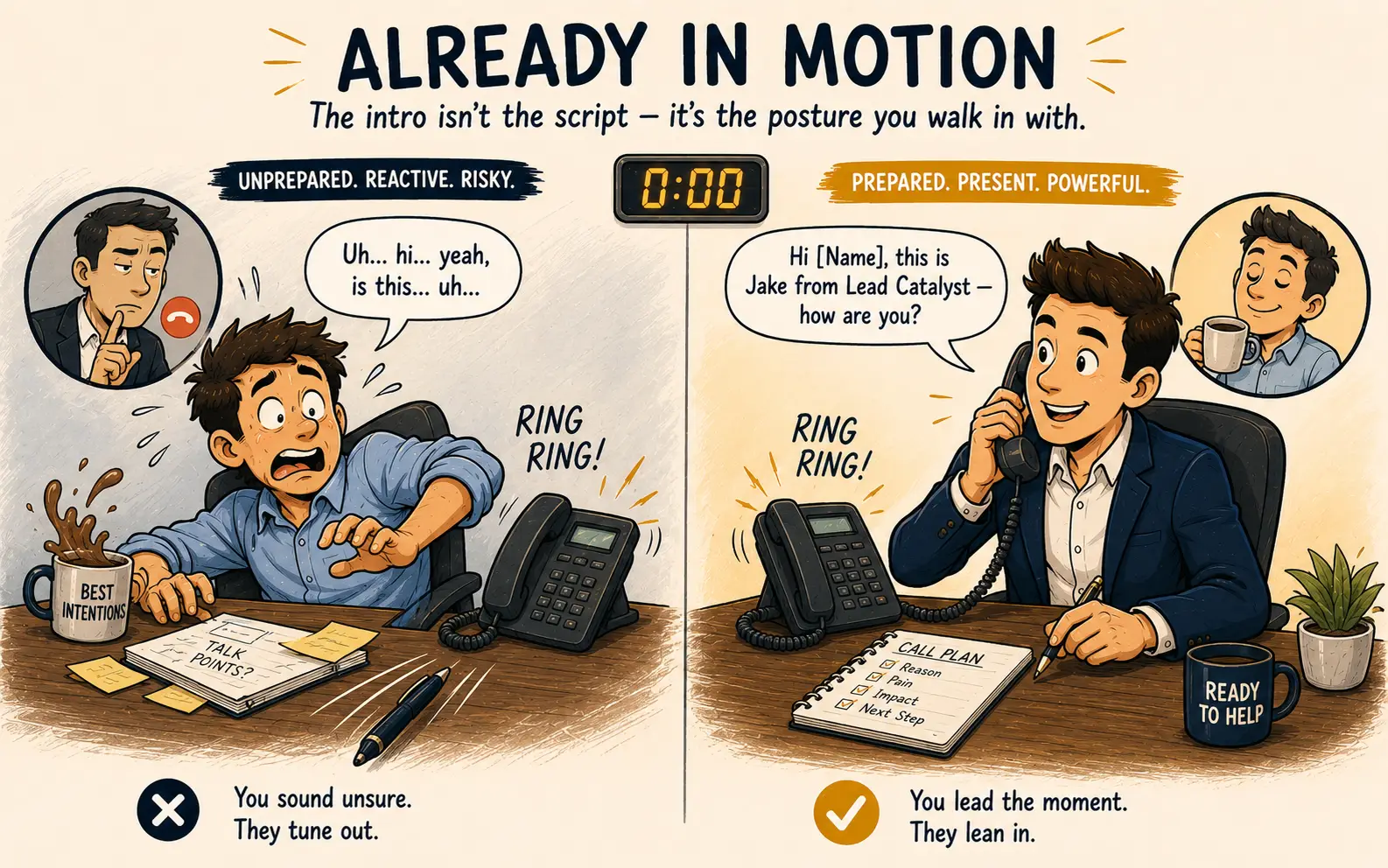
Pattern interrupts change the rhythm.

And when applied inside a structured framework, they make your sales objection handling strategy significantly stronger.

What Is a Pattern Interrupt in Outbound Sales?

A pattern interrupt is a deliberate shift in tone, structure, or question that breaks the prospect’s expectation.

Instead of following the predictable script arc, the rep introduces something that feels different.

Not gimmicky.
Not dramatic.
Just unexpected enough to earn attention.

For example:

Predictable:
“We help companies reduce costs and improve efficiency.”

Interrupt:
“Quick question before I explain why I’m calling. How are you currently handling vendor bottlenecks?”

One creates resistance.
The other creates engagement.

When SDR coaching and call scoring include pattern interrupt usage as a measurable behavior, conversion becomes less dependent on personality.

Why Pattern Interrupts Improve Call Scoring Results

Without structured variation, calls blur together.

Reps fall into autopilot.
Prospects fall into defense mode.

Structured pattern interrupts:

  • Increase listening time
    • Reduce reflex objections
    • Create conversational control
    • Improve discovery depth

When reviewing calls, you can score:

  • Did the rep break expectation early?
    • Did the rep shift the energy after an objection?
    • Did the rep redirect instead of react?

That’s how SDR coaching and call scoring become performance tools instead of morale sessions.

Where Pattern Interrupts Matter Most

There are three key moments where pattern interrupts strengthen your sales objection handling strategy.

1. The Opening

Instead of launching into a pitch, lead with context-driven curiosity.

“Before I explain why I’m calling, can I ask how you’re currently handling X?”

That subtle shift earns attention.

2. The First Objection

When a prospect says “not interested,” most reps defend.

A stronger response interrupts the defensive rhythm.

“Totally fair. Is that because it’s not relevant right now, or because you’ve already solved it?”

Now the objection becomes data instead of rejection.

3. The Close

Weak close:
“I’ll send some information.”

Interrupt close:
“Based on what you said about X, does it make sense to explore this for 15 minutes next week?”

Specificity changes the outcome.

When SDR coaching and call scoring track these micro-moments, improvement becomes consistent.

Pattern Interrupts Without Structure Don’t Work

Here’s where teams get it wrong.

They hear “pattern interrupt” and think it means being clever.

It doesn’t.

Without structure, interruptions feel awkward or forced.

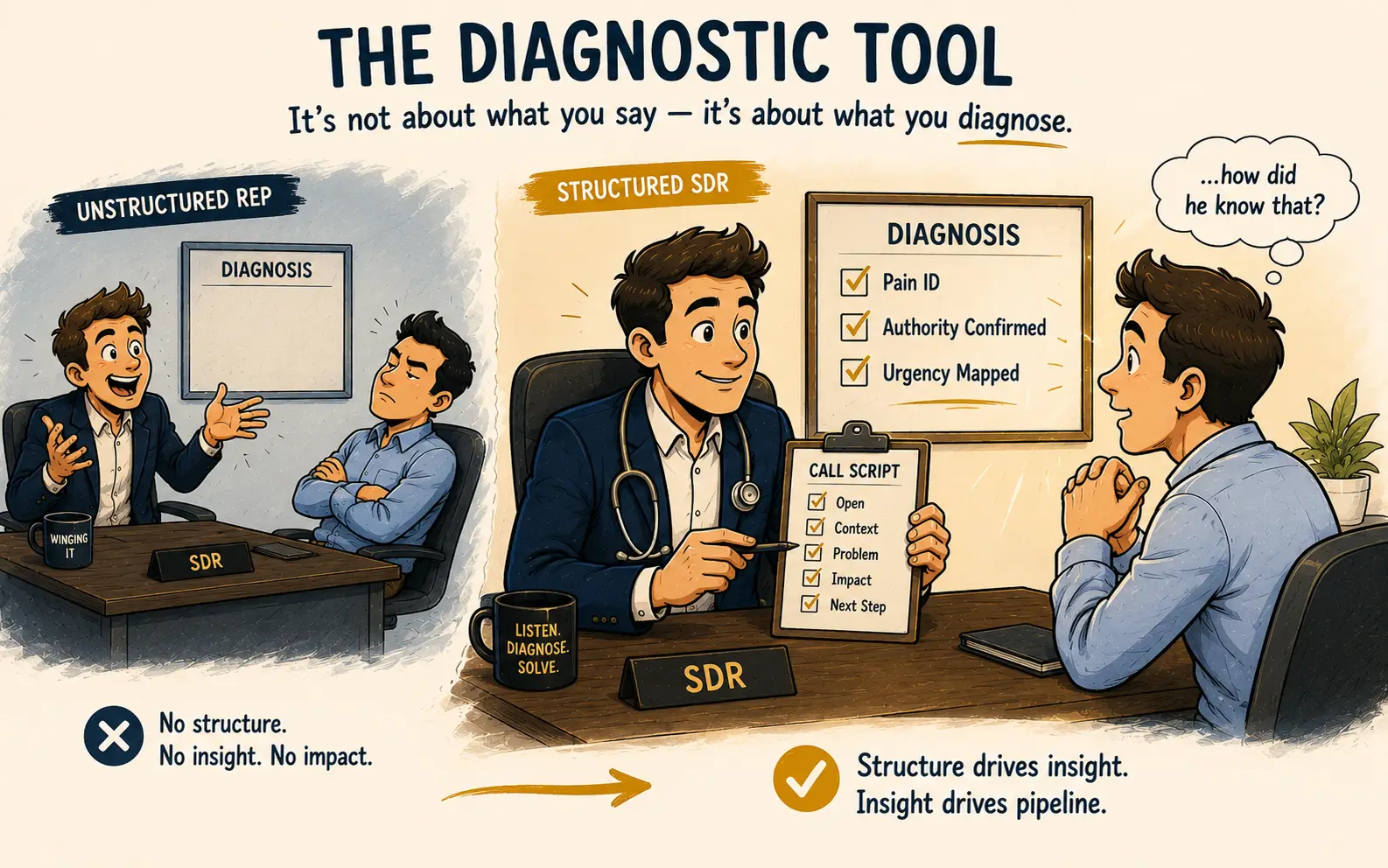
That’s why pattern interrupts must live inside:

  • Defined messaging frameworks
    • Clear discovery sequences
    • Disciplined sales objection handling strategy
    • Measurable coaching standards

At Lead Catalyst, this ties directly into LIST, MESSAGE, NURTURE, KPIs, DATA, and QUALITY ASSURANCE

BrandGuide_LeadCatalyst

.

Because outbound performance should be engineered, not improvised

Lead Catalyst Company Persona &…

.

How to Coach Pattern Interrupts Effectively

If you want real improvement, integrate these into SDR coaching and call scoring reviews:

  1. Identify where the call followed a predictable arc.
  2. Highlight where resistance increased.
  3. Insert structured interrupt language.
  4. Test and measure results across reps.

Now pattern interrupts aren’t creative guesses.

They’re performance adjustments.

That’s how you move from random improvement to scalable consistency.

Signs Your Calls Need Pattern Interrupts

If you’re seeing:

  • Early hang-ups
    • High “not interested” rates
    • Reps struggling to regain control
    • Discovery that feels surface-level

Your calls likely sound too familiar.

Familiar is safe.

Safe gets ignored.

Frequently Asked Questions

What is a pattern interrupt in sales?

A pattern interrupt is a structured shift in language or questioning that breaks a prospect’s expectation and creates engagement during outbound calls.

How does SDR coaching and call scoring improve pattern usage?

By evaluating where and how interrupts are used, leaders can standardize effective language and improve conversion consistency across reps.

Do pattern interrupts replace scripts?

No. They enhance structured messaging frameworks. Without structure, interrupts feel random and ineffective.

How does this strengthen a sales objection handling strategy?

Pattern interrupts shift objections from defensive responses to diagnostic conversations, allowing reps to regain control and move toward discovery.

Improve Your Results

Outbound calls are predictable.

That’s the problem.

Pattern interrupts, when embedded into SDR coaching and call scoring, change the rhythm without losing structure.

And rhythm matters.

If your team sounds like every other caller, conversion will follow the same pattern as every other caller.

Lead Catalyst builds outbound systems where messaging, interruption, and objection handling are measured and optimized. Because performance shouldn’t depend on charisma.


It should depend on structure.