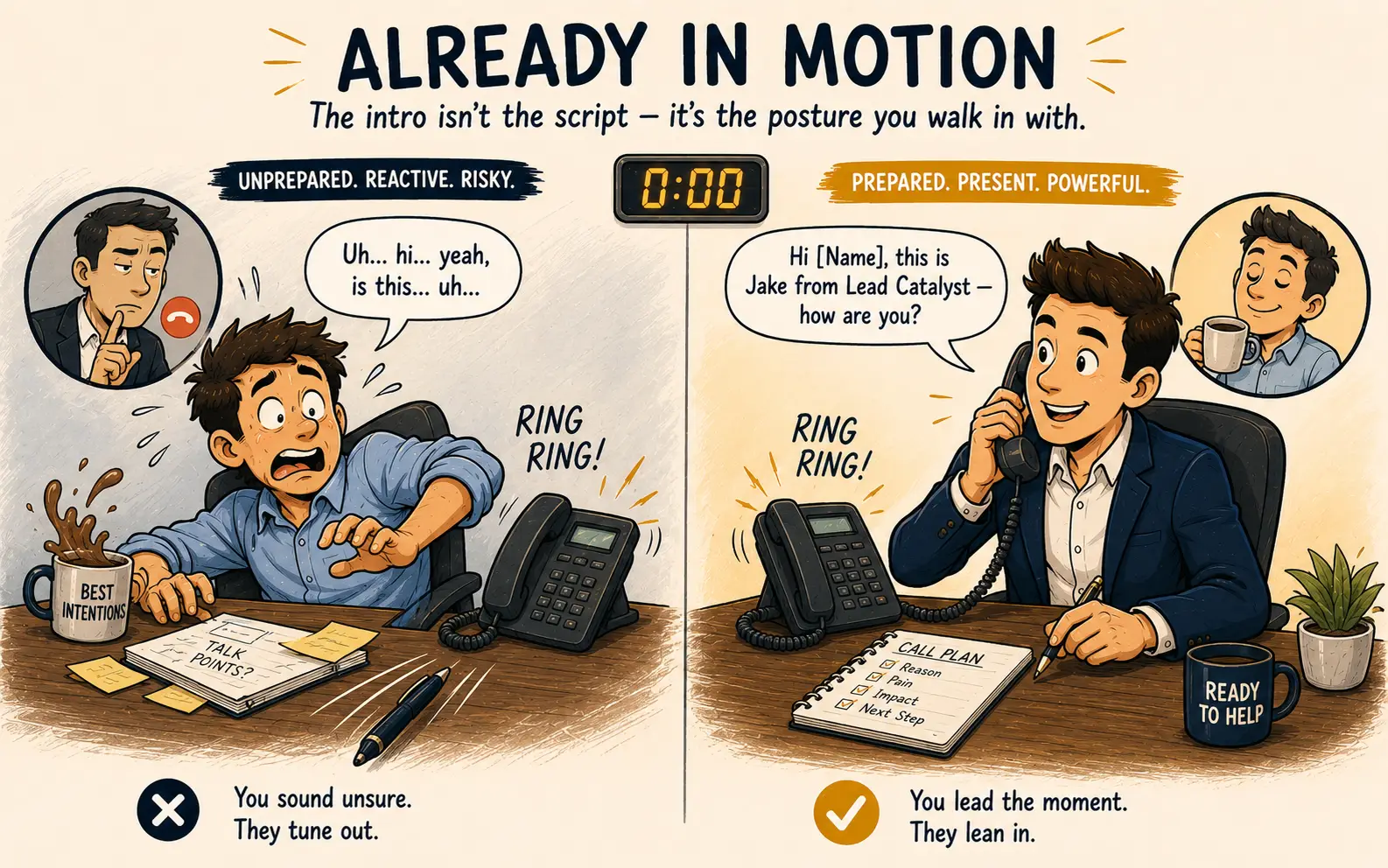

Sales Script Optimization: How to Turn “Not Interested” Into Real Conversations
Most outbound sales teams don’t lose deals because of bad products.
They lose them in the first 30 seconds of a conversation.
A prospect says, “I’m not interested,” and the call ends.
But what if that objection wasn’t the end, just a signal?
How to structure conversations, handle objections, and personalize follow-up so more calls turn into meetings is where we live with our clients once we dialed in targeting.
Scripts Aren’t the Problem, How They’re Used Is
Sales scripts often get a bad reputation. Managers worry their reps will sound robotic or scripted.
In reality, the best-performing sales teams don’t read scripts, they use them as guides. Scripts create consistency, allow for measurement, and make improvement possible.
Without structure:
– Every rep says something different
– Objections are not tracked and handled inconsistently
– It’s impossible to diagnose what’s working and what’s not
With structure:
– Conversations are repeatable
– Objections become learning moments
– Performance improves faster and more predictable
The Introduction: Your Most Expensive 30 Seconds
Sales teams often spend hours perfecting objection handling but neglect the introduction, the most important part of the call.
Your intro must:
1: Clearly state the purpose of the call
2: Make it about the prospect, not your company
3: Earn the next 30 seconds
If your introduction isn’t consistent across reps, you’ll never know whether the issue is:
– The list
– The message
– Or the rep
Scripted introductions aren’t restrictive, they’re diagnostic tools.
We handle Objections with Pattern Interruption
One of the most effective script optimization tactics is the pattern interrupt, especially during objections.
When a prospect says:
“I’m just not interested.”
Most reps respond by backing off or pitching harder. Both approaches fail.
A pattern interrupt does something different. It resets the conversation by asking a thoughtful question that catches the prospect off guard and re-engages their thinking.
For example:
– “Totally fair, can I ask what prompted….?”
– “Out of curiosity, is that because this isn’t relevant right now, or because you already have a solution in place?”
This approach:
– Prevents the conversation from shutting down
– Creates space to uncover real objections
– Opens the door to tailored value
Pattern interrupts work because they respect the prospect while re-centering the dialogue around them.
Why Open-Ended Questions Matter More Than You Think
Another major area of script optimization is question type.
High-performing sales teams limit close-ended questions to:
– Situational discovery (step where you are trying to identify how your prospect is handling product or service you offer)
– Scheduling the next step (e.g., “Does Tuesday or Thursday work?”)
Everywhere else, they rely on open-ended questions.
Why?
Because yes/no questions:
– End conversations early
– Limit insight
– Encourage prospects to disengage
Open-ended questions:
– Reveal real pain points
– Validate assumptions
– Allow reps to build relevant value instead of guessing
If you’re not learning something new on every call, your questions need work.
Call Close and CTA: Where Personalization Wins
Most conversations end without a clear call to action. If you don’t ask for an appointment you won’t get one.
“Great speaking with you, let me know if I can send an email with some information and follow up in the future.”
That’s not follow-up. That’s noise.
Effective cold call close messaging:
-References specific pain points discussed on the call
-Reinforces why the meeting matters to the prospect
-Keeps the call-to-action consistent, but personalizes the context
The structure stays the same.
The content adapts.
This balance of consistency and flexibility is what drives higher conversion rates and booked meetings.
Why Script Optimization Is a Growth Lever
We trained hundreds of sales development reps, take it from us, sales success isn’t about personality.
It’s about process.
Optimized scripts allow teams to:
- Improve faster through coaching
- Identify breakdowns in messaging
- Increase engagement without increasing activity
- Create repeatable, scalable outbound performance
The best sales teams don’t rely on “natural talent.”
They rely on systems.
What to Do Next
If your team is hearing “not interested” too often, don’t ask for more effort.
Ask better questions.
Use smarter interrupts.
Fix the script.
📥 Download Messaging Toolkit Here
📞 Book a Free 15-Min Call Review