
Just like a computer with an operating system, sales must be treated as a system. A sales system involves structured tools and processes to measure, evaluate, and continuously improve sales efforts. Without one, inconsistency rules, resulting in missed goals and unpredictable outcomes. A defined process ensures every sales rep follows the same steps, enabling measurement, comparison, and continuous improvement. The Lead Catalyst System revolves around a structured funnel focusing on activation: connecting with, qualifying, and engaging prospects.
A defined process ensures every sales rep follows the same steps, enabling measurement, comparison, and continuous improvement. The Lead Catalyst System revolves around a structured funnel focusing on activation: connecting with, qualifying, and engaging prospects.

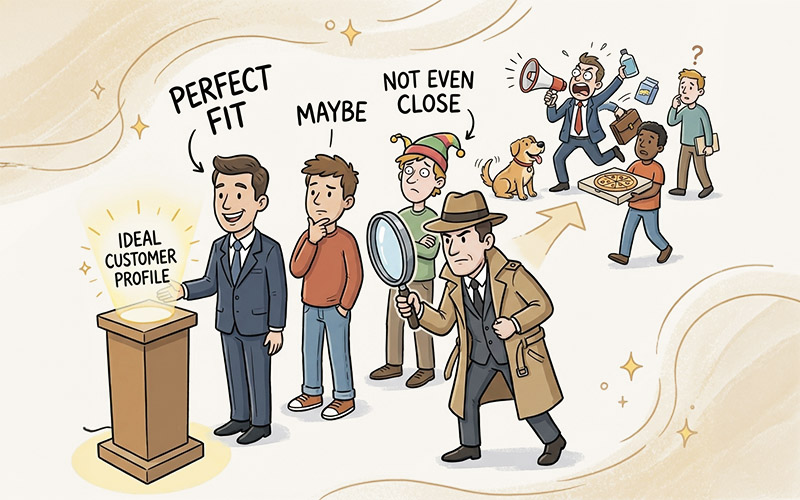
A high-quality list is the cornerstone of any outbound lead generation strategy. The right list ensures you're reaching decision-makers or influencers at companies that fit your ideal customer profile, maximizing your chances of success. Accurate segmentation by industry, company size, and title directly impacts your conversion rates and the overall effectiveness of your campaign.
Segment by:
1
Tailoring by industry ensures relevance from the start.
2
Responsibilities vary significantly by organization size.
3
Target the specific personas within those organizations.
For example, a facility manager at a manufacturing plant differs from one at a real estate firm. Responsibilities vary by organization size, too.
Understand Why People Buy Effective messaging is critical to capturing your prospect's attention and guiding them toward engagement. It speaks directly to their pain points, motivations, and desired outcomes, framing your product or service as the solution. Strong messaging can make the difference between a prospect ignoring your outreach or taking a meeting. When aligned with the right audience and delivered through the right channels, it becomes a powerful tool for increasing conversions and accelerating sales cycles.
Focus your messaging on these buying motives, not features and always think about why this matters to them or “what’s it in for them?”
For example, a facility manager at a manufacturing plant differs from one at a real estate firm. Responsibilities vary by organization size, too.
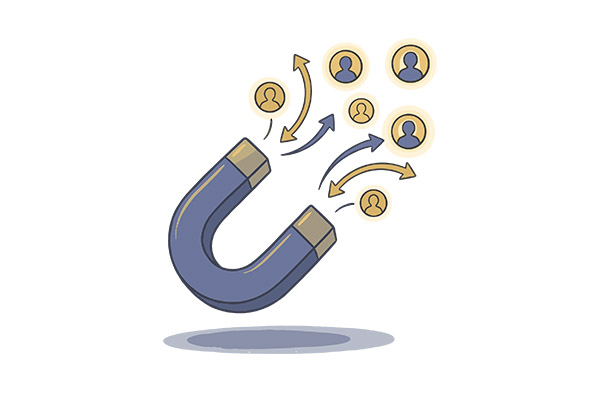
Clear, concise 30-second opener

Identify how your prospect is currently handling your product or service

Turn pain points into discovery questions
Prepare for and disarm them
Why meet with you?
Ask for the meeting. Clearly state next step
Nurturing plays a vital role in converting prospects from cold outreach to being ready to meet. It helps you maintain consistent, value-driven communication that builds trust over time. A well-executed nurture strategy ensures your company stays top-of-mind, so when the prospect is ready to engage, you’re the first call they make. By leveraging multiple touchpoints and personalized follow-ups, you significantly increase your chances of moving leads through the sales funnel.
Focus your messaging on these buying motives, not features and always think about why this matters to them or “what’s it in for them?”
Mix tactics over time:
Create sequences (cadence + content). We designed and developed a 7-step cadence for outreach including 4 emails, 3 phone calls and 2 voicemails.
Use a CRM or outreach tool to:
Automate tasks
Track responses
Segment follow-up timing
Building a relationship with a prospect rarely happens in a single interaction. Even highly qualified prospects, those who see potential value in your offering, often approach initial conversations with a level of skepticism. This is natural. They may be evaluating timing, weighing alternatives, or simply not ready to commit based on one touchpoint alone.
It’s important to recognize that not booking a meeting on the first call is not a failure, it’s often the beginning of the real sales process. Prospects who show curiosity but hesitate to commit are prime candidates for nurturing. With the right cadence, you can stay engaged without being intrusive, reinforcing your value at every step.
A structured outreach cadence ensures that no opportunity slips through the cracks. By combining phone calls, emails, voicemails, and LinkedIn touches in a strategic sequence, you create multiple opportunities to connect while reinforcing your message. This repetition, when done thoughtfully, builds recognition and keeps you top-of-mind.
Consistent touchpoints allow you to gradually build familiarity, credibility, and trust. Each interaction should add value, whether it’s a relevant insight, a helpful resource, or a thoughtful follow-up that shows you understand their business. Over time, this positions you not just as a salesperson, but as a trusted advisor.
Clear KPIs for a Sales Development Rep (SDR) aren’t just “nice to have”, they’re the difference between random activity and predictable pipeline growth.
1
Without KPIs, an SDR can say “I was busy all day.” With KPIs, you can see what that busyness produced. Calls, emails, meetings booked, these become measurable outputs instead of vague effort.
2
SDRs don’t close deals, so it’s easy for their role to feel disconnected from revenue. KPIs (like qualified meetings booked or pipeline generated) tie their work directly to what actually drives growth.
3
If expectations aren’t clear, reps guess, and usually guess low or inconsistently. Clear KPIs answer: What should I be doing daily? What does success look like? Where should I focus my time? That clarity alone improves output.
4
Instead of “you need to try harder,” you get: “Your connect rate is strong, but meeting conversion is low, let’s fix your pitch or your targeting.” KPIs pinpoint where the problem is.
5
You can identify: Top performers (and what they’re doing differently), Underperformers (and where they’re falling short). Without KPIs, performance reviews become subjective and inconsistent.
6
Good reps want to know where they stand. KPIs let them: Track progress daily, Adjust behavior quickly, Build confidence when they’re hitting targets. It turns the role into a game they can win.
7
When each SDR consistently hits KPIs, you can forecast: Meetings next week, Opportunities next month, Revenue next quarter. No KPIs = no predictability = unstable pipeline.
If you only track activity, you get busywork.
If you only track outcomes, you miss why results are off.
If your SDR schedule is all over the place, your results will be too. Block time with intention:
Data analysis in an SDR environment is about turning raw activity into clear signals on what’s working, what’s not, and where to fix it. It removes guesswork and replaces it with patterns you can act on.
1
Analyze job titles, company size, and industry to spot contacts who lack decision-making power.
2
Review call length, early drop-offs, and conversion rates to see if the issue is the opener, message, or close.
3
Compare replies, booked meetings, and outcomes by script, campaign, or value proposition.
4
Consistent effort with poor results points to a system issue. Inconsistent effort points to an execution issue.
Data is factual, but its value comes from identifying repeatable behaviors. Once you see the patterns, you can stop reacting and start optimizing where it actually matters: list, message, or execution.
Quality Assurance (QA) is what keeps your SDR team consistent, effective, and improving over time. It ensures reps aren’t just making calls, they’re delivering the right message and evolving over time, handling objections properly, and following a proven structure.
By regularly reviewing calls and providing feedback, QA helps identify exactly where reps need coaching and where the process itself may be breaking down. It turns individual performance into team-wide insights, allowing you to refine scripts, improve training, and raise the overall standard.
In short, QA connects execution to improvement, so performance doesn’t plateau, it compounds.
Strong sales reps can (and should) do their own QA as well. In fact, the fastest-improving reps are usually the ones who regularly review their own calls and self-diagnose what’s working and what isn’t. The difference is that self-QA requires structure and objectivity, otherwise it turns into “that felt like a good call” instead of real improvement.
1
What the ideal call structure looks like, what a “good” call sounds like, and benchmarks (conversion rates, call length).
2
Is the opener engaging? Strong questions? Communicating value? Asking for the meeting?
3
Ask: “Where am I consistently losing people?” “Do most of my calls end early?” “Conversations but not conversions?”
4
Not blaming the prospect too quickly, recognizing when the message isn’t landing, willing to adjust.
5
Rewrite opener, test different objection response, adjust tone/pacing.
Manager-led QA ensures consistency. Self-QA accelerates individual growth. The best teams use both.
Visit checkup to evaluate your current status.
Use the Script Board template at scriptboard.
Start with industries you know and grow from there.
Use mixed outreach, track metrics. Evaluate every 90 days.