An ICP segmentation strategy splits your ideal customer profile into specific, reachable groups by industry, company size, and buyer role, so every rep calls people who can actually buy. It’s the step most outbound programs skip, and it sets the ceiling on everything that follows: connect rates, conversations, and meeting quality.
When outbound underperforms, teams usually blame the script or the reps. More often, the problem was decided before anyone picked up the phone, when the list was built too broad. (We dig into that in why your sales team is failing before the first dial.)
Key takeaways
Segment by industry, company size, and buyer role, not just by broad vertical.
Build segments from your best existing customers, then launch one segment at a time.
Whether lists are built in-house or by an outsourced SDR team, someone who knows your business has to define the ICP.
What Is an ICP Segmentation Strategy?
Your ideal customer profile (ICP) describes the companies most likely to buy from you and succeed with what you sell. An ICP segmentation strategy breaks that profile into groups small enough that one message fits each group.
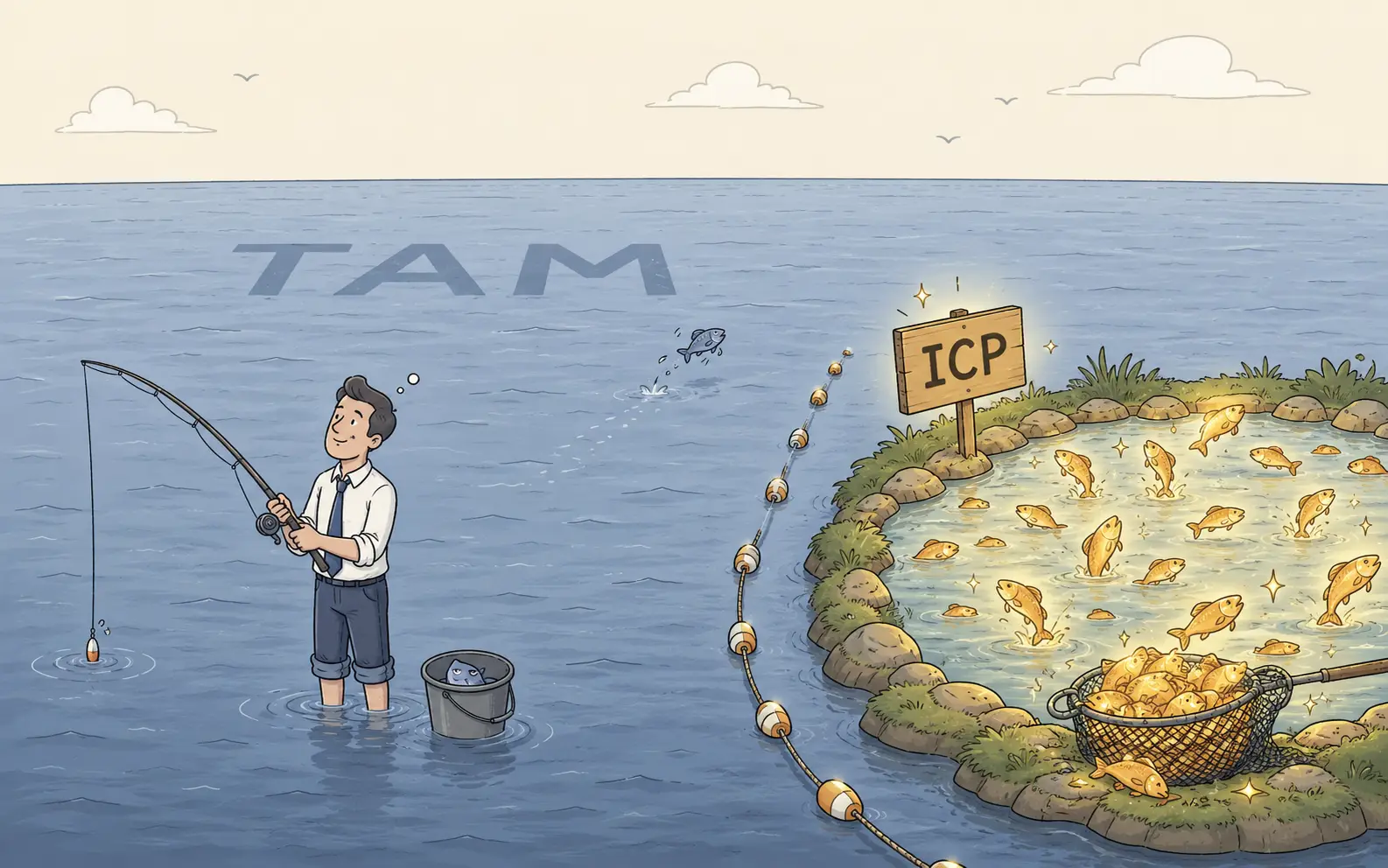
That’s different from your total addressable market. Your TAM tells you how big the opportunity is. Segmentation tells your reps whom to call this week. For a deeper comparison, see TAM vs. ICP.
Why Does List Quality Determine Outbound Results?
An SDR team executes against the list it’s given. If that list includes the wrong industries, company sizes, or titles, even skilled reps spend the week in conversations that can’t go anywhere.
Outsourcing doesn’t change this. An outsourced SDR team can bring process and discipline, but it can only perform as well as the list it works from. Cut the share of unqualified contacts, and the same activity turns into more real conversations, with no extra dials.
The Three Dimensions of a Segmented Prospect List
1. Industry: Go Narrower Than the Vertical
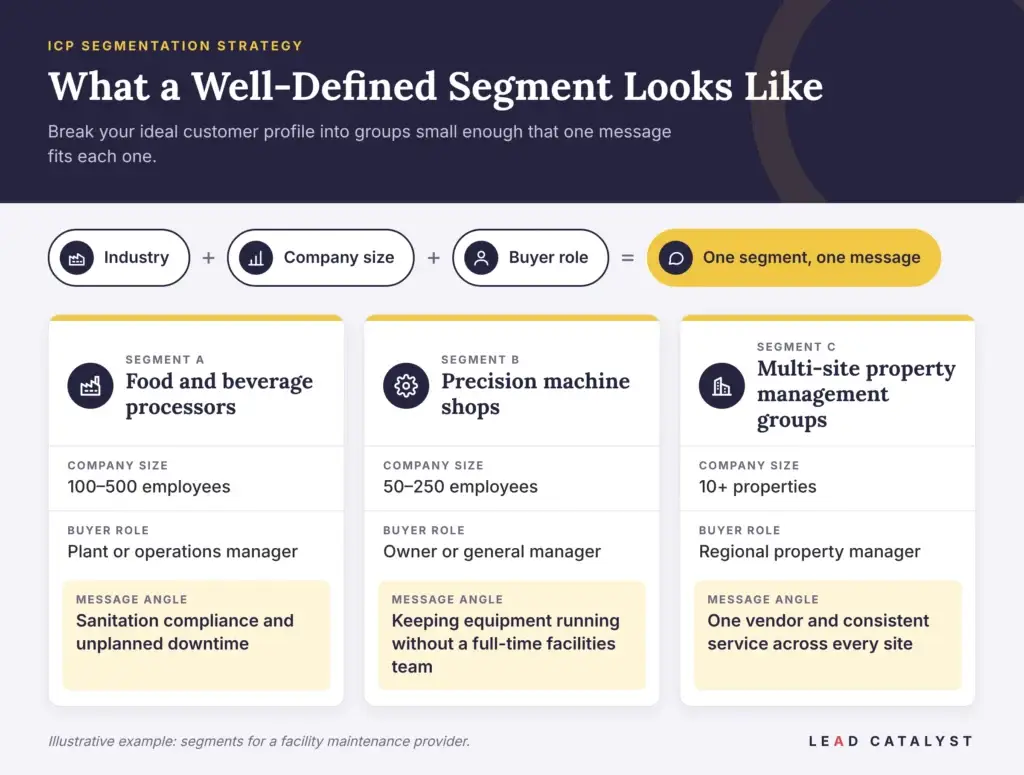
“Manufacturing” isn’t a segment. Contract manufacturers, food processors, and precision machine shops face different problems and respond to different messages. Define the sub-sectors your best customers actually come from.
2. Company Size: Match How They Buy
Buying behavior changes with scale. At a small company, the owner may make the call; at a large one, a committee and procurement get involved. Set size bands, by employees or revenue, where your offer fits and the sales cycle makes sense.
3. Buyer Role: Confirm Who Owns the Problem
A title doesn’t guarantee authority. A smaller plant may hand a problem to its operations manager that a larger company gives to a dedicated team. Confirm which role feels the pain and can approve the next step before you build the list around it.
What Does a Well-Defined Segment Look Like?
Here’s an illustrative example for a company that sells facility maintenance services. Each row is one segment, with its own list and its own message.
Signs Your Prospect List Is Too Broad
Meeting quality swings from week to week.
Prospects often say “this isn’t relevant to us.”
No one can describe the ideal buyer in one sentence.
Response rates differ sharply by industry or company size, but the list treats them all the same.
Reps rework the pitch on every call because no single message fits.
How Do You Build a High-Converting List Before Launch?
Audit your best customers. Find the industries, company sizes, and roles that close fastest and stay longest.
Turn the patterns into two to four segments. Write each one down: industry, size band, buyer role, and the problem it cares about most.
Set qualification rules. Decide what disqualifies a contact before a rep ever dials.
Launch one segment at a time. A narrow first campaign shows what works before you scale.
Match the message to the segment. Each segment gets its own opener and proof points. Our B2B messaging framework shows how.
Review results by segment every quarter. Track connect rate, conversations, and meetings for each segment, then refine or cut what underperforms. These are the numbers that belong on your outbound KPI scorecard.
What Results Does Precise Segmentation Produce?
Two Lead Catalyst clients show what happens when the list comes first:
Produce-industry software company: It had more than 15,000 potential customers and no outbound program. Narrowing that market to a focused segment, using its own client data to find the best-fit companies and personas, produced a steady 3–4 qualified leads per week. Read the case study.
Precision manufacturer: Lists built around specific production requirements (volume, part type, and fit) and refined in real time led to a 9.5% connection rate, about one qualified appointment per week for 16 months, and three new deals, including one worth $500K a year. Read the case study.
In-House vs. Outsourced List Building
In-house teams know the business, but they can carry blind spots, like assumptions about who buys that haven’t been tested in years. An outsourced SDR team brings segmentation discipline, data tools, and a fresh look at the market. Either way, the strategy needs your input on fit, deal size, and who actually signs.
The strongest approach is shared: define the ICP together, let the outbound team build and work the list, and review results by segment. That’s how our B2B sales generation services work.
Start With the List, Then the Script
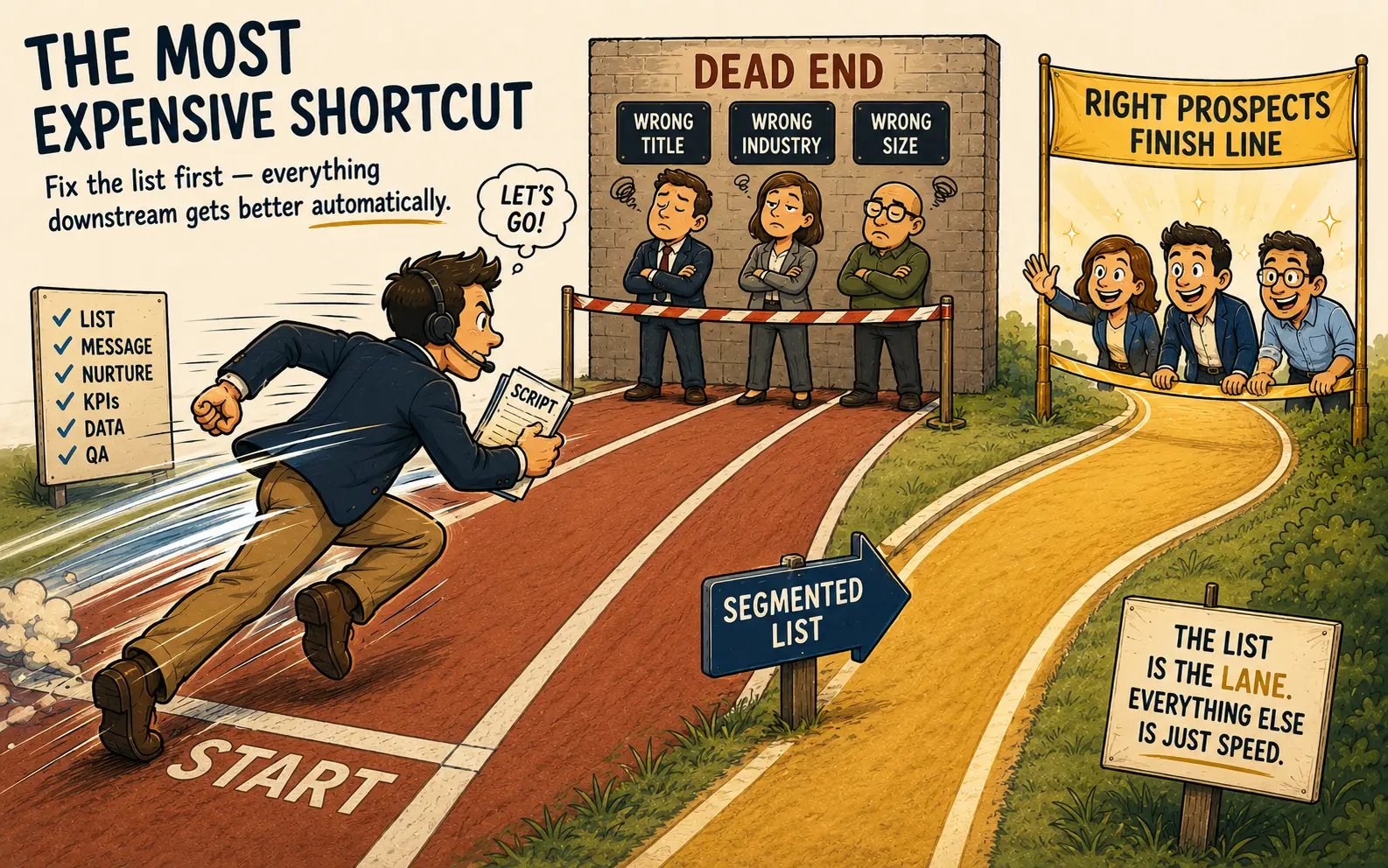
A better script can’t fix the wrong audience. Get your segments right first, then build messaging and cadence on top. The list is the first of six components in a structured outbound sales system for a reason.
Want help defining your segments? Book a strategy call, and we’ll review your ICP and your current list.
FAQs
What makes a prospect list high-converting?
A high-converting list closely matches your ICP: the right industry sub-sector, the right company size band, and a contact who owns the problem and can approve a next step. Clean, current contact data matters too, because outdated titles and numbers waste dials.
What’s the difference between TAM and an ICP?
Your total addressable market (TAM) is every company that could theoretically buy from you. Your ICP describes the companies most likely to buy and succeed. An ICP segmentation strategy turns that profile into the specific lists your reps call.
How often should you refine a prospect list?
Review it at least quarterly, and sooner if results shift for a segment. People change jobs and companies grow, shrink, or get acquired, so even a strong list goes stale.
Can better segmentation improve meeting quality?
Yes. When calls reach the right role at a company that fits, more conversations qualify, and meetings hold up later in the pipeline. In one manufacturing program, precise targeting produced about one qualified appointment per week for 16 months.