TAM vs. ICP: How to Avoid Wasting Dials in Outbound Sales
Total addressable market looks impressive.
It fills investor decks and supports aggressive growth narratives. It signals scale and opportunity. What it does not do is tell your SDR who to call tomorrow morning.
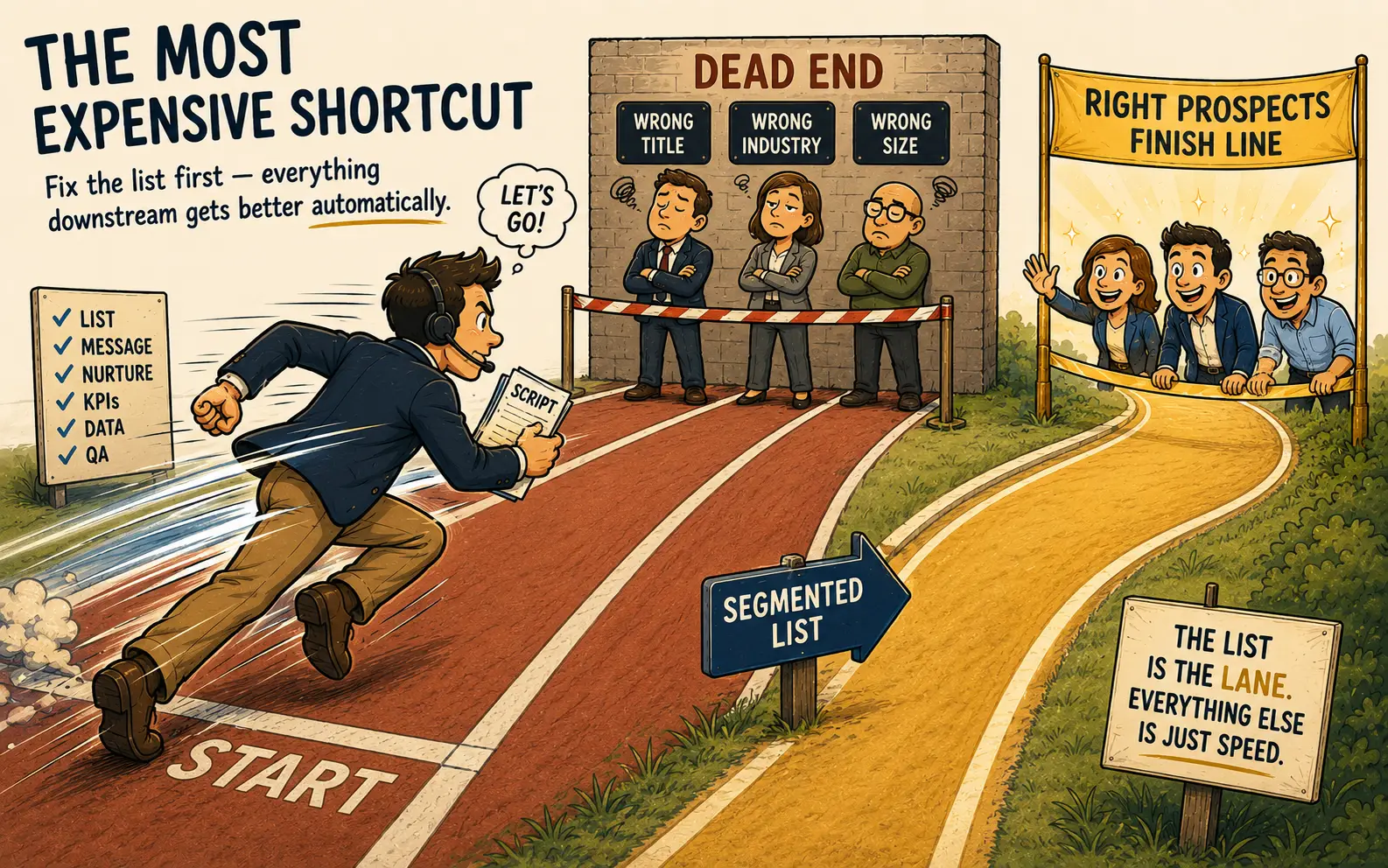
Confusing total addressable market with an ICP segmentation strategy is one of the fastest ways to waste outbound capacity.
Clarity here changes everything.
What Total Addressable Market Actually Is
Total addressable market represents the full revenue opportunity available if you sold to every potential customer in your category.
It answers a strategic question:
How large is the opportunity over time?
It does not answer:
Who converts fastest? Who feels urgency? Who fits our economics right now?
Your total addressable market defines the outer boundary of growth. It is a macro lens.
It is not a targeting plan.
What an ICP Segmentation Strategy Actually Does
An ICP segmentation strategy narrows the field from possible to probable.
It identifies:
Which industries convert consistently
Which company sizes move quickly
Which buying roles hold authority
Which segments produce profitable, repeatable deals
Your total addressable market may include thousands of accounts. Your ICP segmentation strategy should narrow that dramatically.
Outbound is not designed to pursue theoretical opportunity.
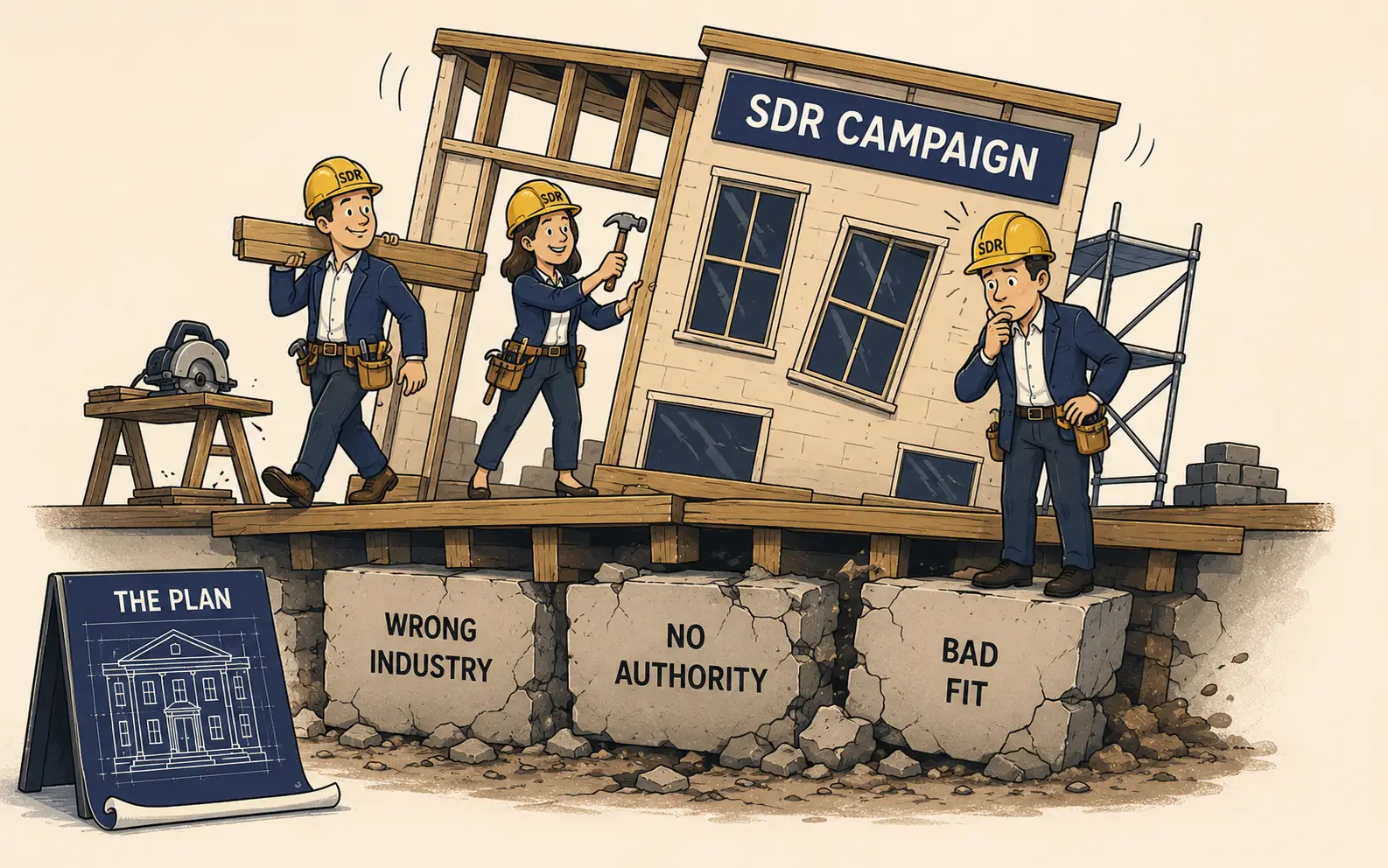
When teams treat total addressable market as their outbound targeting framework, three predictable problems emerge.
1. SDRs Call Too Broadly
Reps bounce between industries, company sizes, and buying roles. Patterns never stabilize because the sample set is inconsistent.
Without focus, there is no signal.
2. Messaging Becomes Generic
If your audience includes everyone, your messaging becomes cautious and diluted. Value propositions soften to avoid excluding segments.
Safe messaging rarely earns strong response.
3. Data Becomes Meaningless
When campaigns mix five segments simultaneously, performance analysis becomes unreliable. Conversion rates fluctuate and optimization efforts chase noise.
You cannot improve what you cannot isolate.
That is how dials get wasted.
How to Use Total Addressable Market the Right Way
Total addressable market is still useful.
It informs:
Long-term growth projections
Market expansion sequencing
Vertical prioritization
Product roadmap decisions
It should not determine this week’s outbound list.
That is where ICP segmentation strategy becomes operational.
How to Build a Smarter Outbound Focus
Start with your total addressable market. Then narrow aggressively.
Ask:
Which industries close fastest?
Which company sizes align with our pricing and sales cycle?
Which segments generate repeatable wins?
From there, refine across three dimensions:
Industry
Sub-sectors behave differently. Treat them differently.
Company Size
Authority and urgency shift with scale.
Role
Decision-making titles vary across organizational structures. Validate influence, not assumptions.
Your ICP segmentation strategy should reduce “everyone we could sell to” into “buyers most likely to convert now.”
That shift improves efficiency immediately.
The Math Behind Focused Targeting
Imagine an SDR connects with 15 prospects per week.
If half fall outside your ideal segment, half your productive capacity is wasted before discovery begins. If tighter segmentation reduces unqualified conversations from 50 percent to 30 percent, conversion improves without increasing effort.
That is leverage.
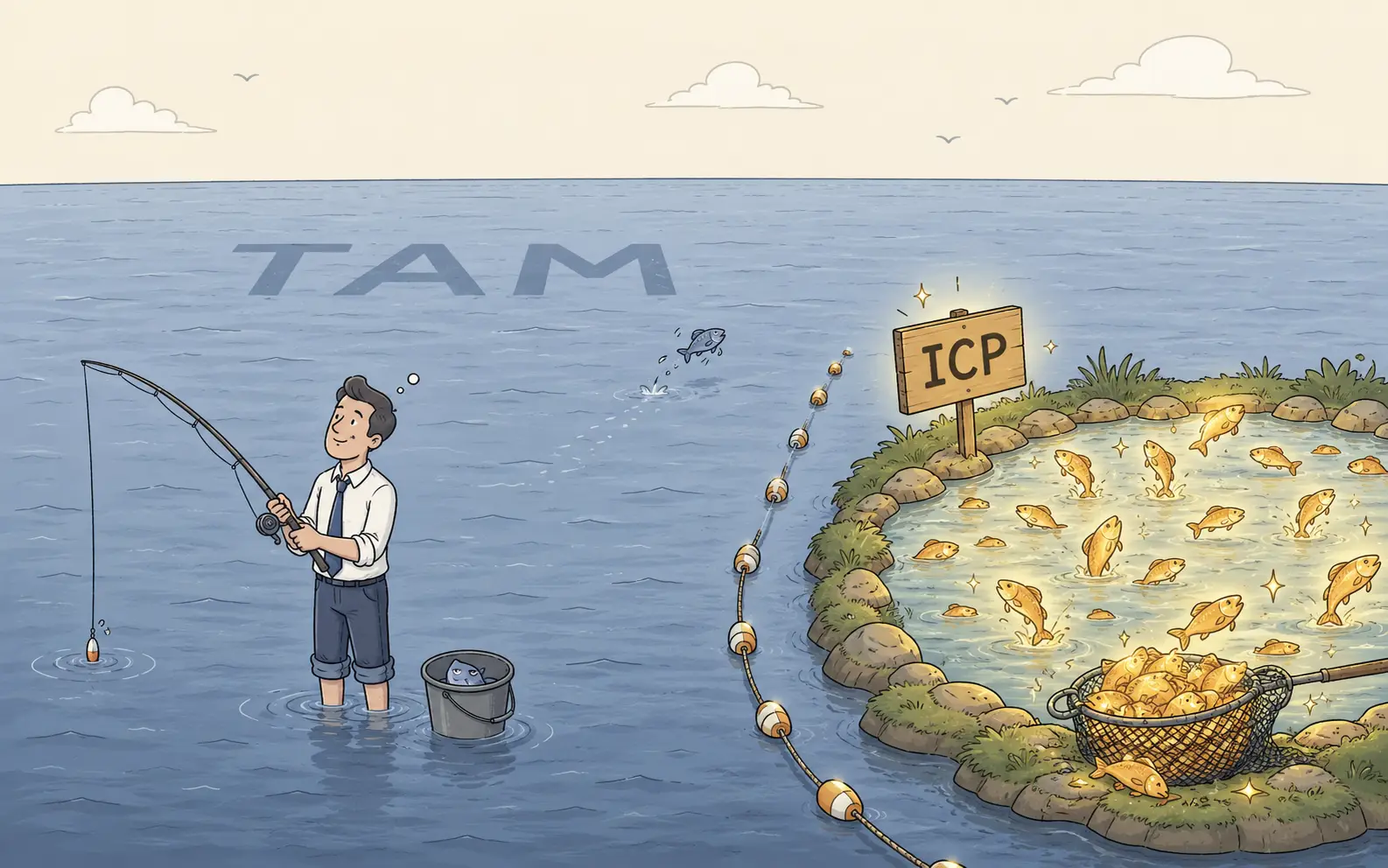
Total addressable market tells you how large the ocean is.
ICP segmentation strategy tells you where the probability lives.
Signs You Are Targeting Based on TAM Instead of ICP
If you see these patterns, segmentation is likely too broad:
Wide swings in meeting quality
Objections that vary dramatically by segment
Difficulty articulating your ideal buyer clearly
Messaging that feels safe rather than specific
Outbound should feel focused and repeatable. When your ICP segmentation strategy is disciplined, conversations align more consistently and performance stabilizes.
That is how structured outbound infrastructure is built.
Frequently Asked Questions
What is the difference between total addressable market and ICP?
Total addressable market defines the full size of your potential opportunity. An ICP segmentation strategy defines the specific segments most likely to convert efficiently in outbound campaigns.
Should outbound target your full total addressable market?
No. Outbound should prioritize high-fit segments identified through ICP segmentation strategy to maximize efficiency and conversion rates.
How often should ICP be refined?
Quarterly reviews are recommended. Segmentation should evolve based on performance data and market shifts.
Can a narrow ICP limit growth?
No. A focused ICP improves profitability and conversion. Expansion should follow proven success, not precede it.
Final Word
Total addressable market is a strategic lens.
ICP segmentation strategy is an execution filter.
If your SDRs are dialing broadly and conversion feels inconsistent, you are likely operating at the TAM level instead of the ICP level.
Lead Catalyst helps companies refine segmentation so outbound shifts from scattered effort to structured precision.