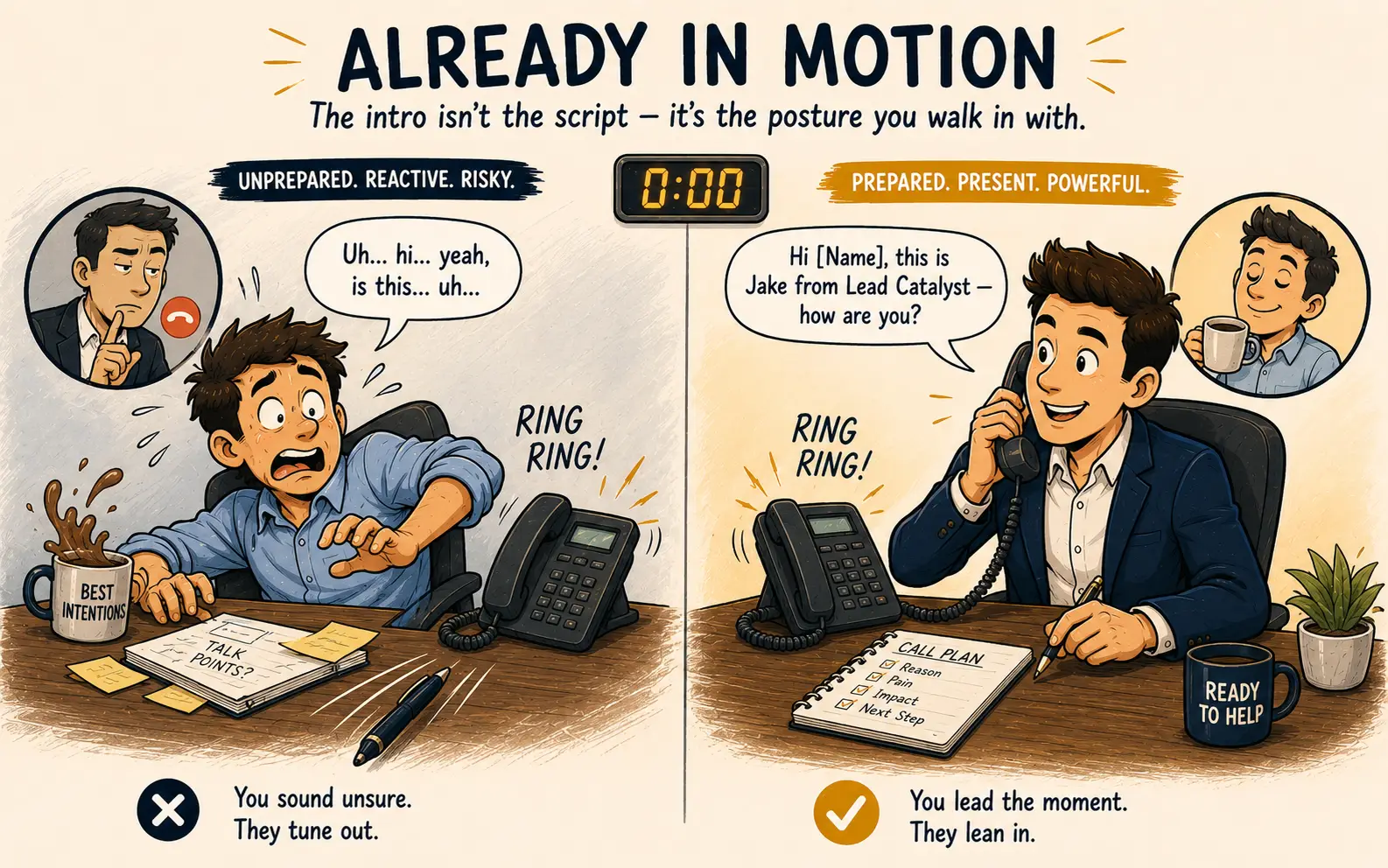
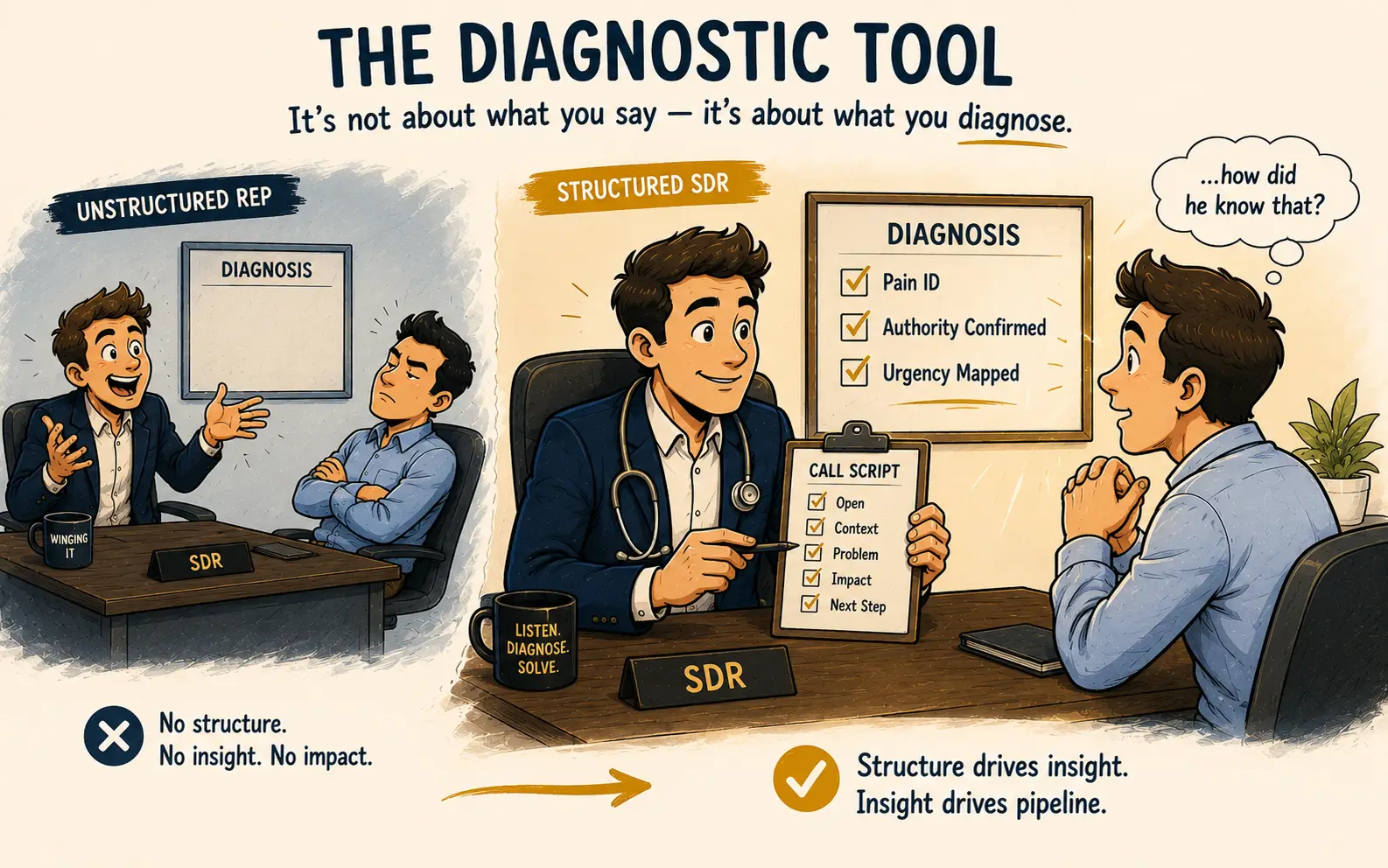
When relevance is engineered into your B2B messaging framework, objections decrease before they surface.
2. Invites Discovery Instead of Resistance
A strong B2B messaging framework is diagnostic, not promotional.
Instead of pushing features, it creates dialogue. That’s where your sales objection handling strategy begins.
If a prospect says they’re not interested, the framework guides clarification:
“Totally fair. Is that because it’s not relevant right now, or because you’ve already addressed it?”
Now the objection becomes information instead of rejection.
That shift is structural.
3. Protects the Close
Discovery depth determines close strength.
If the first 30 seconds are vague, discovery remains shallow. If discovery is shallow, the close feels forced.
A disciplined B2B messaging framework ensures the opening sets up qualification, not just conversation.
This is where SDR coaching and call scoring reinforce consistency. You can’t improve what you don’t measure.
How SDR Coaching and Call Scoring Strengthen Your B2B Messaging Framework
Without structure, coaching becomes subjective.
With structured SDR coaching and call scoring, performance becomes measurable.
You can evaluate:
Was relevance established clearly?
Was discovery layered intentionally?
Was the objection handling aligned to the framework?
Was a defined next step secured?
Now breakdowns are visible.
Instead of telling a rep to “sound more confident,” you can isolate whether the B2B messaging framework was executed correctly.
That’s how conversion improves across the entire team, not just with one strong performer.
At Lead Catalyst, messaging, coaching, and measurement operate as integrated outbound infrastructure — not isolated tactics.
Signs Your B2B Messaging Framework Needs Refinement
If you’re seeing:
High early hang-up rates
Frequent “not interested” within seconds
Wide performance gaps between reps
Low meeting show rates
The issue likely isn’t effort.
It’s the structure of your B2B messaging framework.
Objection handling doesn’t begin after resistance. It begins in the first sentence.
The Multiplier Effect of a Structured B2B Messaging Framework
When your B2B messaging framework is standardized and reinforced through SDR coaching and call scoring:
Messaging becomes consistent
Objections become predictable
Discovery depth increases
Close rates improve
Rep variability decreases
Outbound shifts from effort-driven to system-driven.
Volume becomes an accelerator instead of a compensator.
Frequently Asked Questions
What is a B2B messaging framework?
A B2B messaging framework is a structured conversation model that establishes relevance, guides discovery, clarifies objections, and supports consistent outbound conversion.
How does SDR coaching and call scoring improve messaging?
Structured SDR coaching and call scoring ensure the B2B messaging framework is executed consistently, allowing teams to diagnose and improve conversion performance.
Why focus on the first 30 seconds?
Because prospects decide quickly whether a call is relevant. A structured B2B messaging framework earns continuation instead of resistance.
Should we prioritize volume or structure?
Structure first. Volume amplifies whatever system already exists, strong or weak.
Is You B2B Messaging Framework Converting?
The first 30 seconds are not filler.
They determine whether the conversation exists at all.
If your B2B messaging framework is weak, no amount of activity will compensate. When it is structured, measurable, and reinforced through SDR coaching and call scoring, conversion stabilizes and pipeline compounds.
Lead Catalyst builds outbound systems where messaging is engineered, tested, and refined over time.