Outbound Sales Infrastructure vs. Hiring More SDRs: What Scales Faster?
Outbound sales infrastructure determines whether growth compounds or plateaus.
When pipeline slows, most leadership teams reach for the same lever: headcount. More SDRs, more dials, more activity. It feels decisive and measurable.
And in many cases, it is the wrong first move.
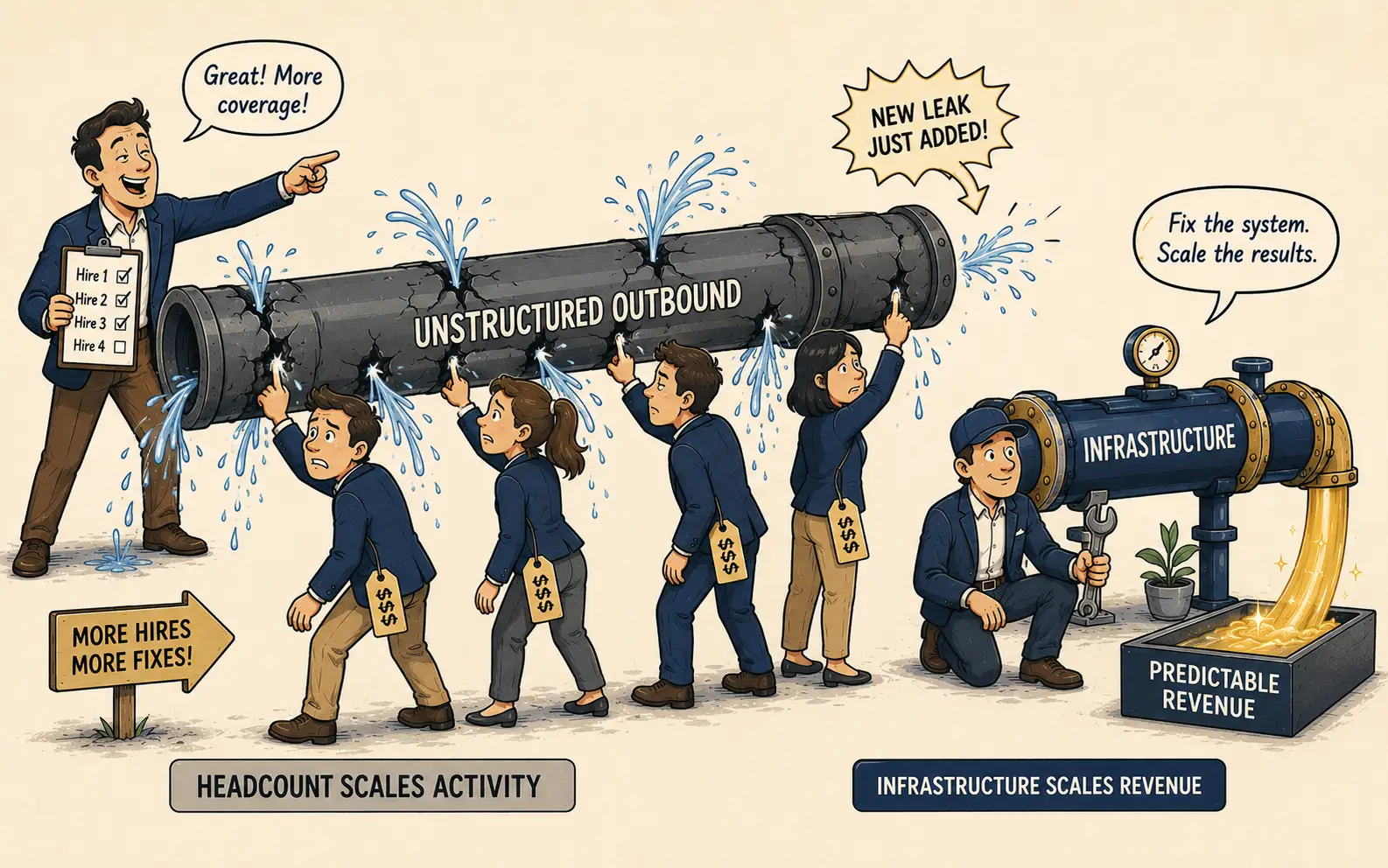
If your system is inconsistent, adding people does not solve the problem. It distributes it across more salaries.
The real scaling question is not how many reps you have. It is whether your outbound sales infrastructure can support them.
What Is Outbound Sales Infrastructure?
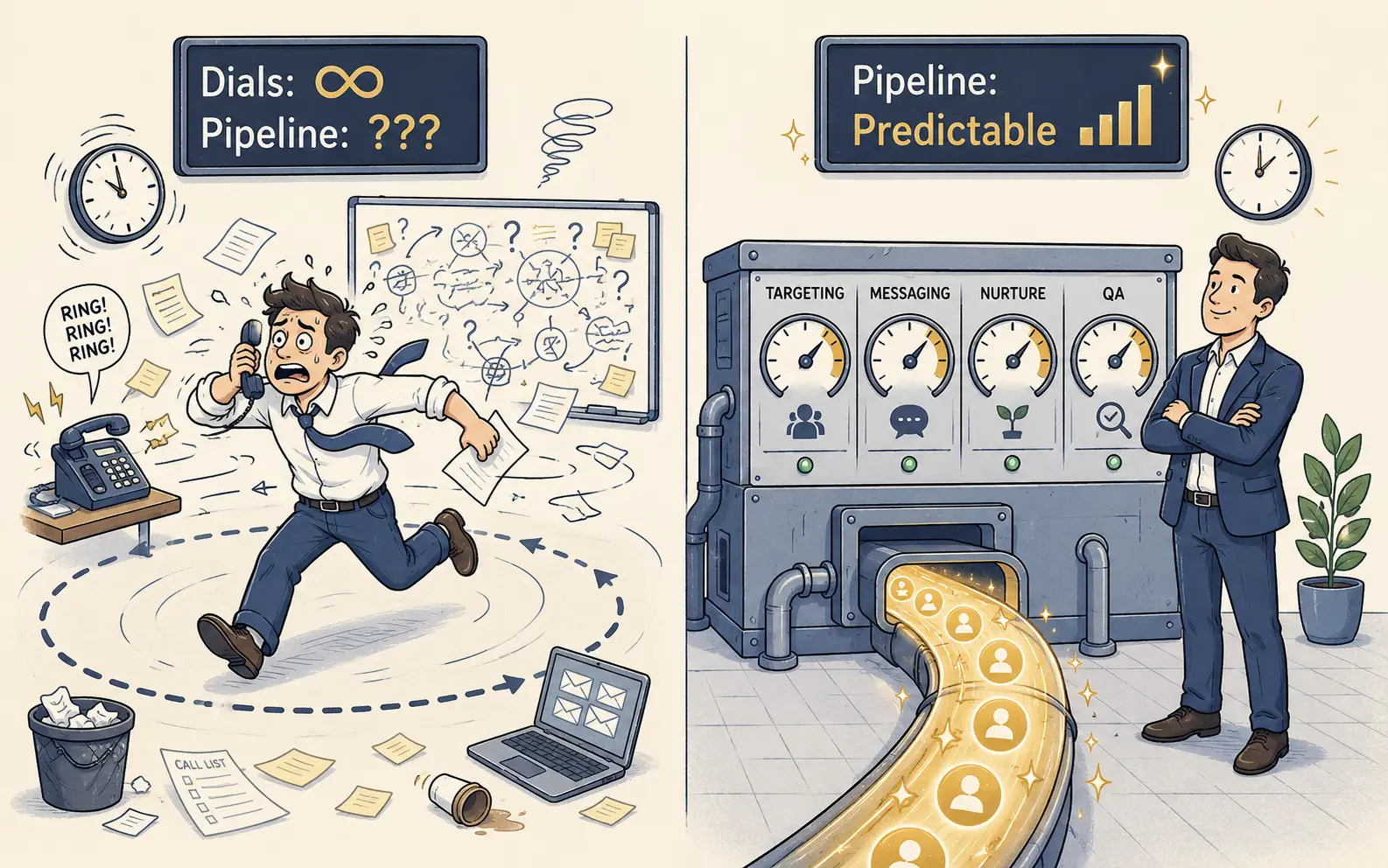
Outbound sales infrastructure is the structured framework that governs how prospecting operates across targeting, messaging, cadence, measurement, and coaching.
It includes:
Clearly defined ICP targeting
Segmented and validated lists
Persona-based messaging frameworks
Multi-touch nurture cadence
KPI scorecards tied to conversion outcomes
Objective quality assurance and coaching standards
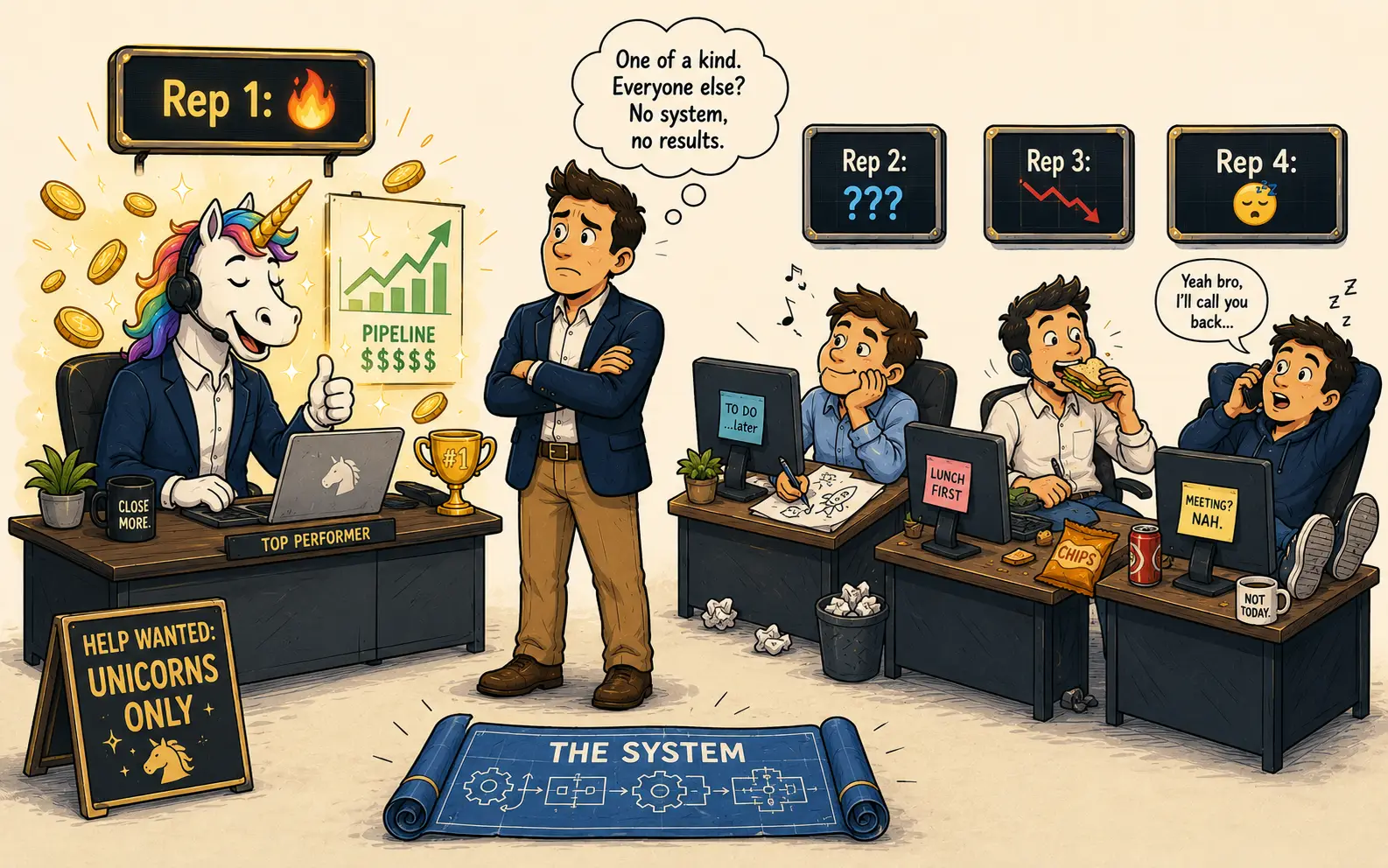
Without outbound sales infrastructure, performance depends heavily on personality and short-term momentum.
With it, performance becomes repeatable.
This is the foundation of The Lead Catalyst System™, where LIST, MESSAGE, NURTURE, KPIs, DATA, and QUALITY ASSURANCE operate in alignment.
Infrastructure does not replace talent. It makes talent scalable.
Why Hiring Alone Rarely Scales Predictably
Hiring feels like growth because it increases visible effort. However, hiring into an unstructured system introduces three predictable issues.
1. Messaging Fragmentation
If discovery is undefined and scripts are loose, each SDR builds their own interpretation of success. That makes performance impossible to diagnose and optimize.
2. No Clear Baseline
Without defined KPIs and conversion benchmarks, leadership cannot determine whether performance gaps are caused by targeting, messaging, qualification, or coaching.
You end up measuring activity and hoping conversion follows.
3. Expensive Ramp Time
New hires struggle longer when there is no standardized framework to plug into. Ramp becomes longer, payroll increases, and results fluctuate.
The outcome is familiar: higher overhead paired with the same volatility.
More effort does not equal more control.
What Actually Scales Faster
Outbound sales infrastructure scales faster than headcount because it improves conversion before volume increases.
When the system is strong:
Targeting sharpens
Messaging becomes diagnostic
Objection handling standardizes
Follow-up converts “not now” into future pipeline
Rep performance variance decreases
Volume layered onto a strong system compounds.
A weak system amplifies inefficiency.
Predictable growth follows structure first and expansion second.
Where Outsourced SDR Services Fit
This is where outsourced SDR services can outperform internal hiring.
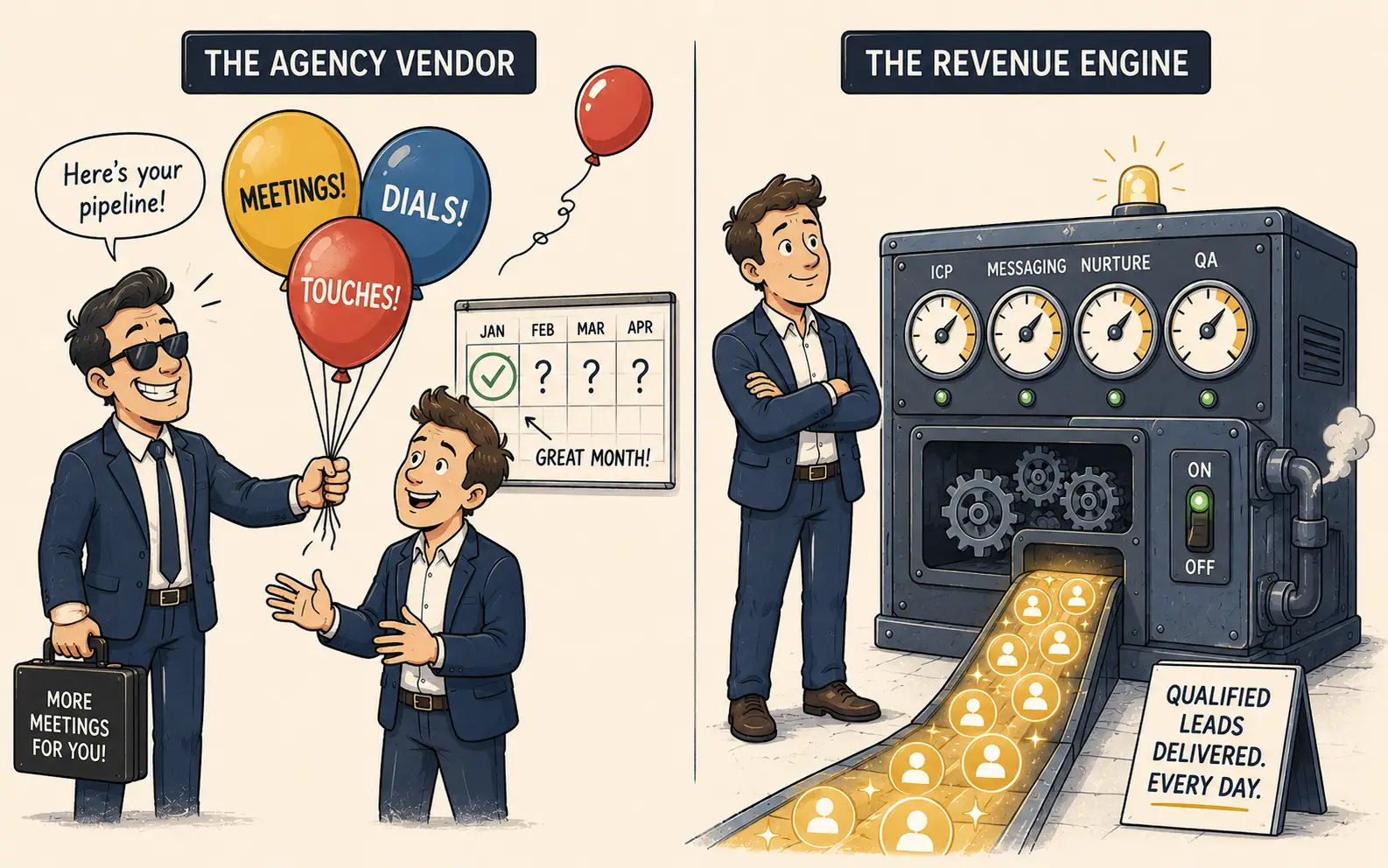
The right partner does not simply provide callers. They provide operating discipline.
High-performing outsourced SDR services include:
ICP definition and segmentation strategy
Structured messaging frameworks
Defined cadence models
KPI reporting tied to conversion
Call scoring and quality assurance
Data-driven optimization loops
You are not buying labor. You are accessing a functioning outbound engine.
That distinction changes the economics.
Infrastructure First, Then Scale
If you already have a mature outbound sales infrastructure in place, hiring can absolutely accelerate results.
But if that structure is weak or undefined, hiring introduces risk. Variability increases. Forecasting becomes unstable. Coaching becomes reactive.
The more disciplined sequence is:
Install structured outbound sales infrastructure
Validate conversion benchmarks
Refine targeting and messaging
Then scale volume
This approach reduces waste, shortens ramp time, and improves forecasting clarity.
It also protects culture. High-performing SDRs prefer systems where success is repeatable.
Frequently Asked Questions
What is outbound sales infrastructure?
Outbound sales infrastructure is the structured framework that standardizes targeting, messaging, cadence, KPIs, and quality assurance so prospecting produces predictable results.
When should a company choose outsourced SDR services over hiring?
Organizations without a mature outbound system often benefit from outsourced SDR services because they gain both execution and infrastructure without extended ramp time.
Can hiring SDRs work without infrastructure?
It can produce short-term results with strong individual performers. Over time, performance variability and inefficiency typically increase.
How do you know if your outbound system is weak?
Common indicators include inconsistent conversion rates, unclear ICP definitions, high rep variability, and unstable forecasting.
The Real Scaling Question
The question is not whether to hire.
It is whether your outbound sales infrastructure is strong enough to support growth.
If not, scale the system before scaling the team.
Lead Catalyst builds structured outbound infrastructure and supports it with disciplined execution so growth is engineered rather than hoped for.