From Random Activity to a Pipeline Generation System: What Changes?
A pipeline generation system changes how outbound behaves at its core.
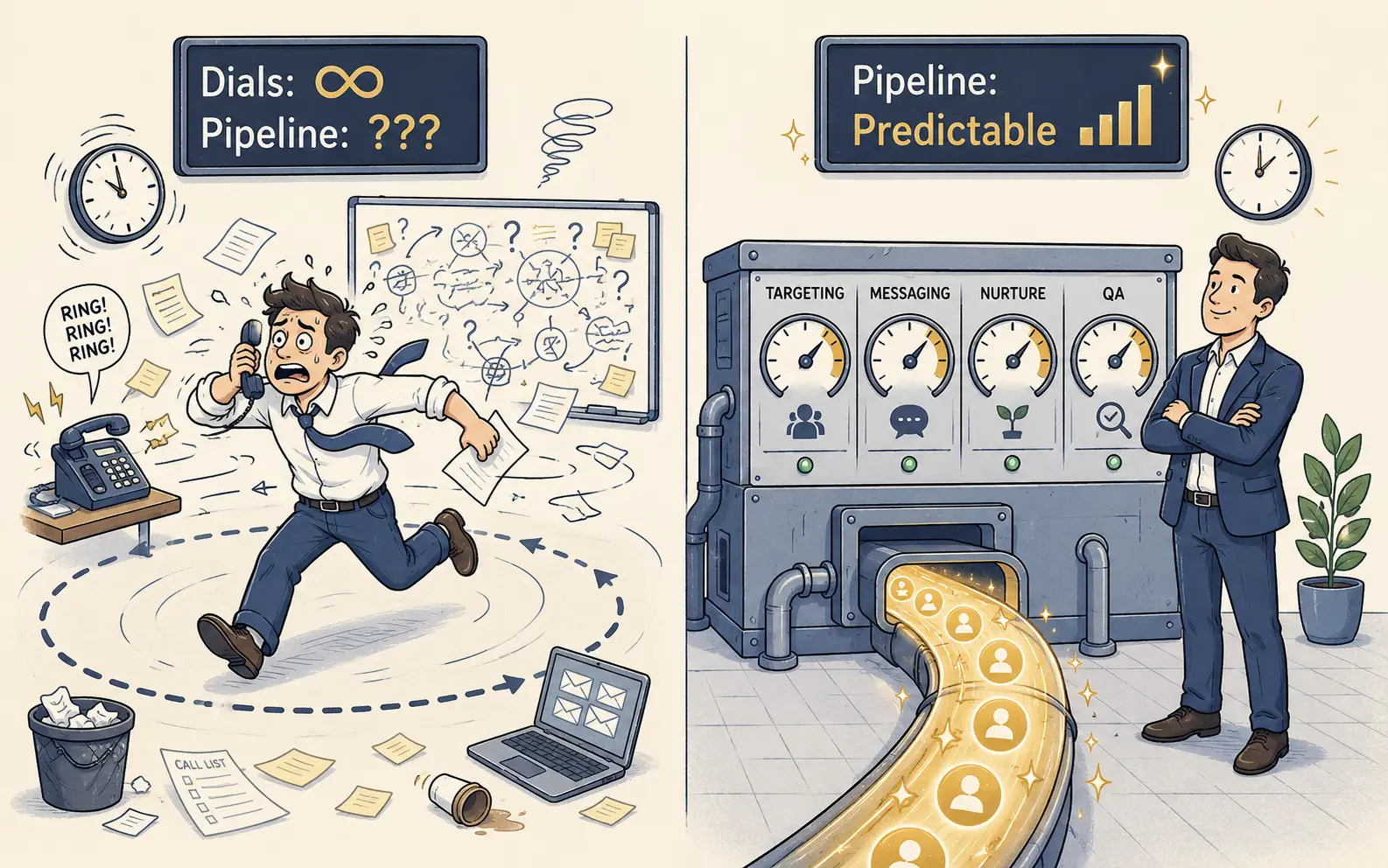
Most teams are not short on effort. They are short on structure. Calls are made, emails are sent, follow-ups happen when they’re remembered. That activity can produce meetings, but it rarely produces predictability.
If consistent revenue momentum is the goal, random effort must evolve into data-driven outbound sales governed by a real system.
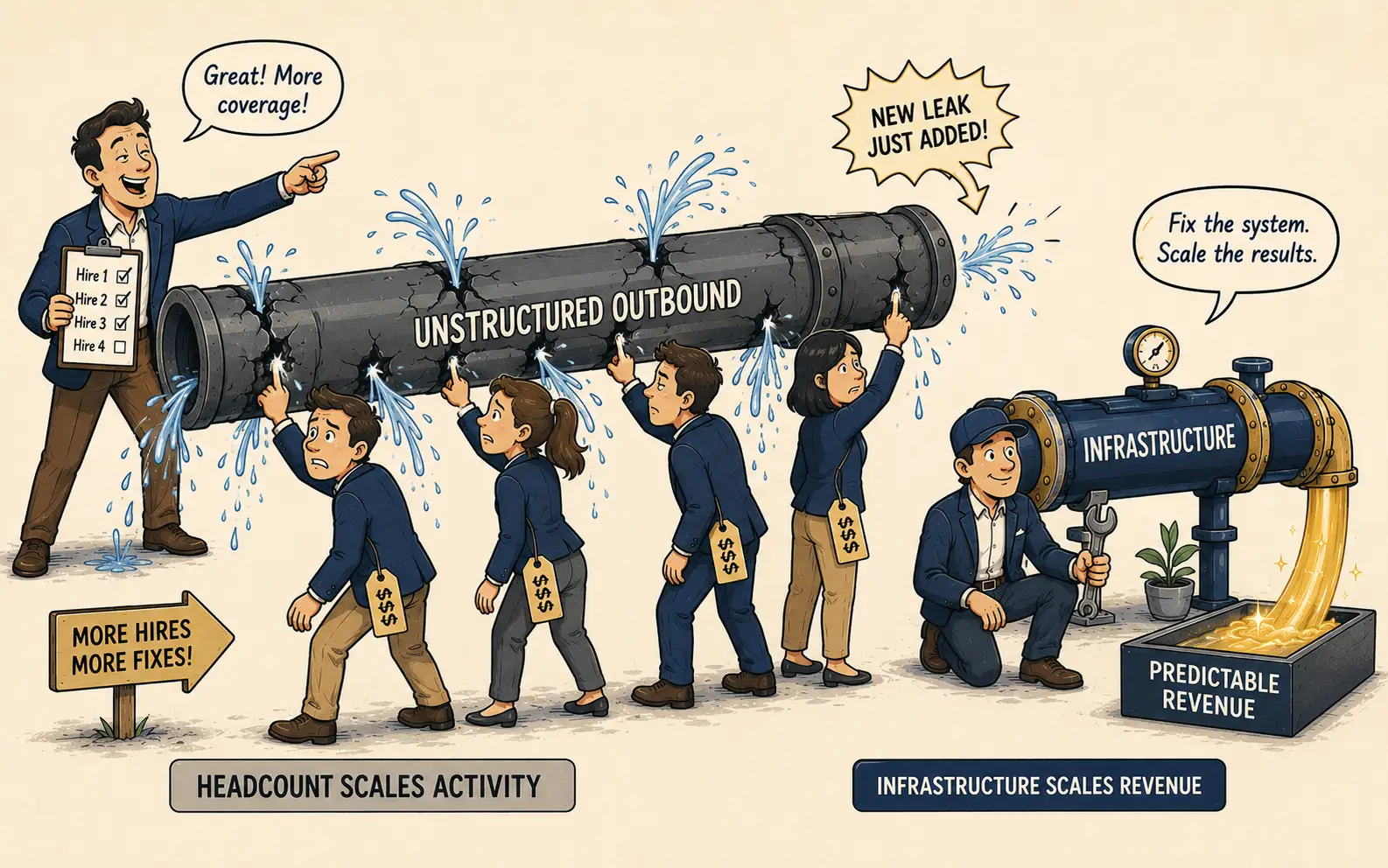
The difference is not intensity. It is infrastructure.
Let’s examine what actually changes.
What Random Outbound Activity Looks Like
Random outbound often feels productive. Calendars are active. Dashboards show motion. Reps are busy.
It typically includes:
- Broad prospect lists
- Generic messaging
- No clearly defined ICP
- Inconsistent follow-up
- KPI reports focused on dials
- Subjective call feedback
There is movement. Occasionally, there are wins.
But when performance drops, no one can explain why.
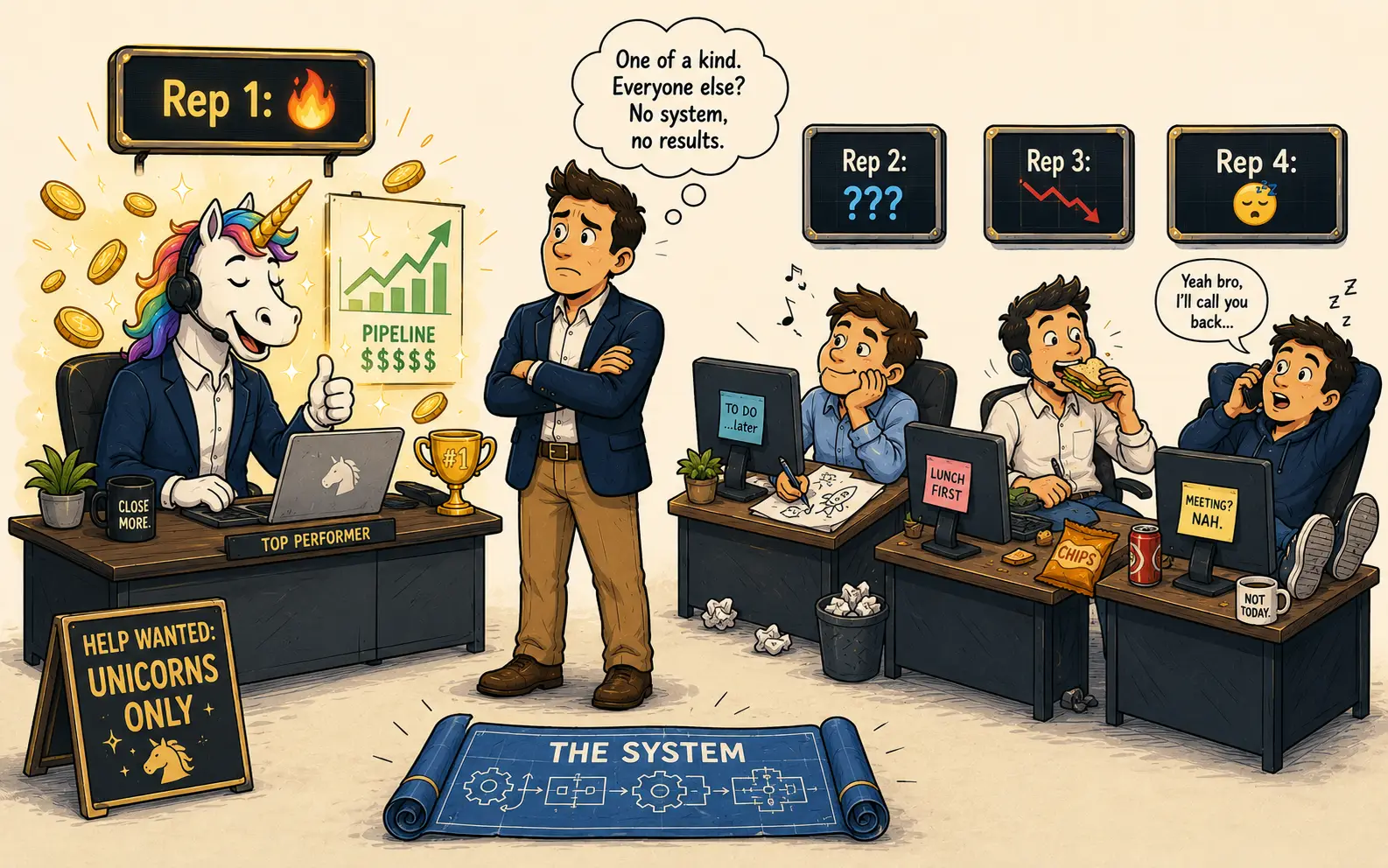
Without a pipeline generation system, outbound depends heavily on individual rep ability and short-term energy. When that energy fades or one strong performer leaves, results fluctuate.
That model is fragile.
What a Pipeline Generation System Actually Is
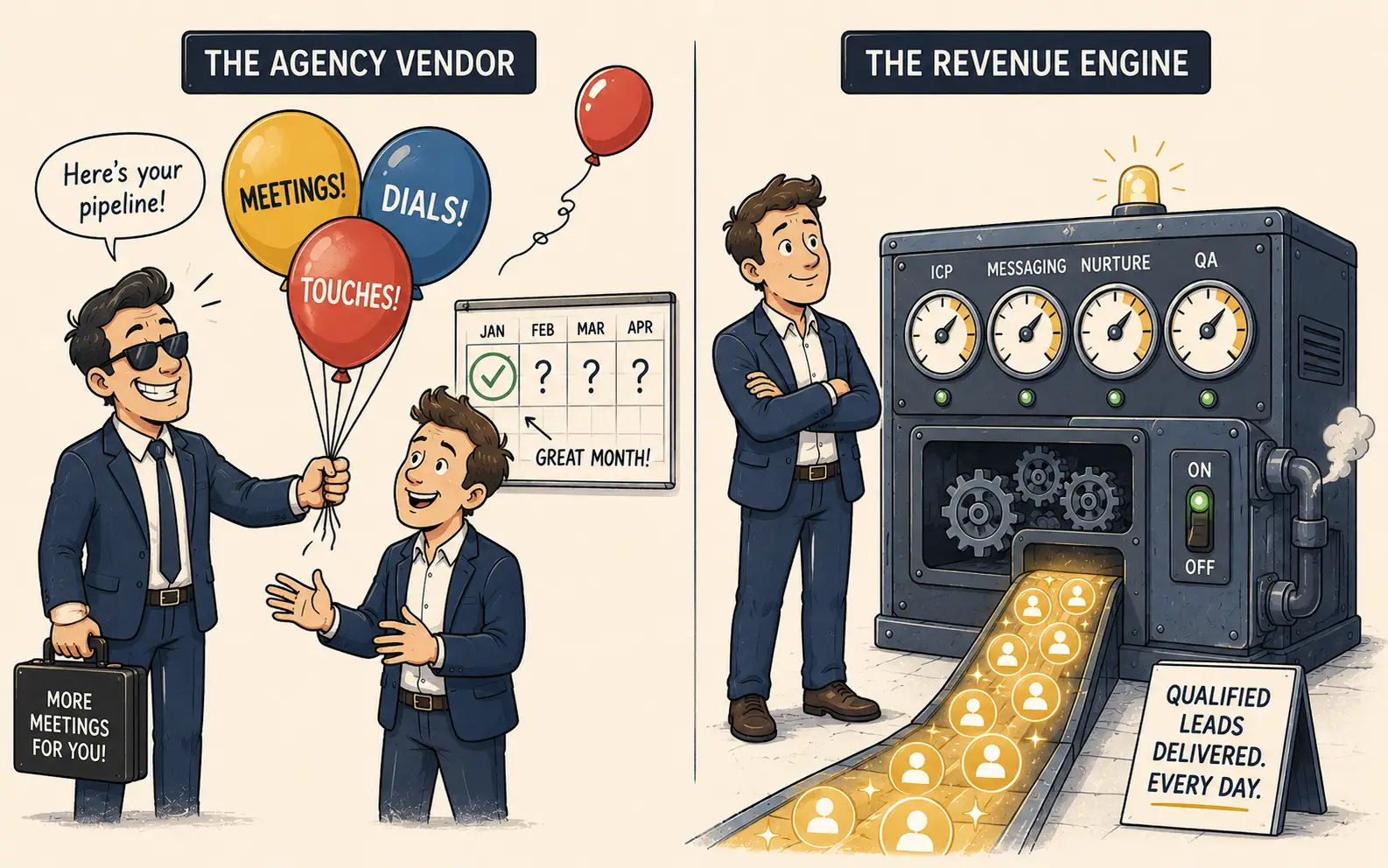
A pipeline generation system is not a campaign. It is a structured outbound framework that standardizes targeting, messaging, cadence, tracking, and optimization.
It includes:
- Defined Ideal Customer Profile segments
- Validated, segmented lists
- Persona-based messaging frameworks
- Structured multi-touch nurture cadence
- Clear qualification standards
- KPI scorecards tied to outcomes
- Objective quality assurance
This is where data-driven outbound sales begins to compound. Instead of reacting to outcomes, you diagnose and refine systematically.
Outbound stops being a quarterly initiative.
It becomes operating infrastructure.
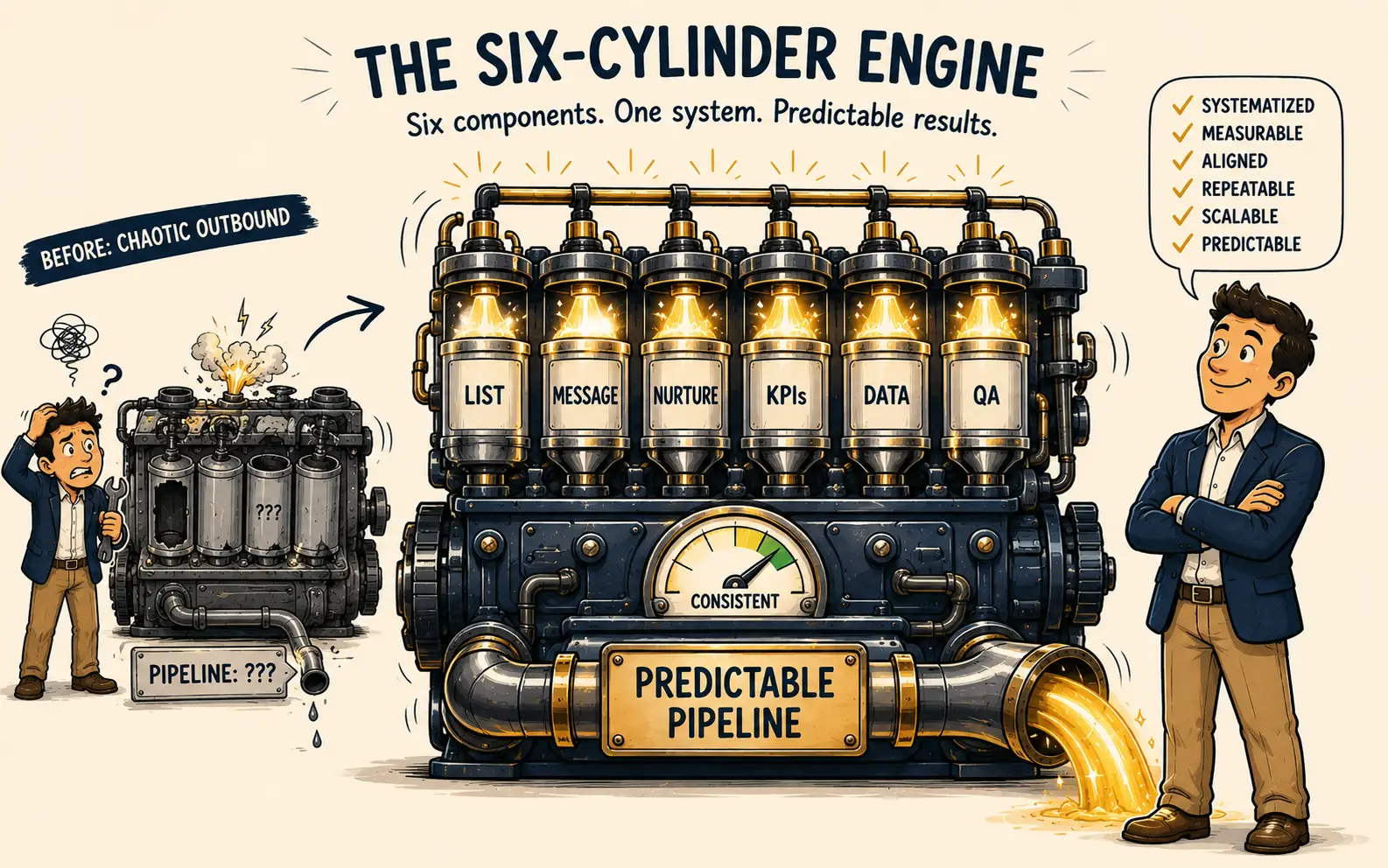
At Lead Catalyst, this structure integrates LIST, MESSAGE, NURTURE, KPIs, DATA, and QUALITY ASSURANCE into one disciplined system.
The First Major Change: Targeting Becomes Precise
In random outbound, teams chase wide markets in hopes of finding traction.
In a pipeline generation system, targeting is intentional and validated. Industries are segmented. Company sizes are defined. Buying roles are confirmed before outreach begins.
Precision reduces wasted conversations and increases qualification rates. Connect rates stabilize. Conversion becomes more consistent.
Guesswork fades.
The Second Major Change: Messaging Becomes Diagnostic
Random messaging is written to sound persuasive.
Structured messaging is built to uncover information.
With data-driven outbound sales, conversations follow a defined diagnostic flow:
- Clear introduction
- Situational discovery
- Pain identification
- Objection clarification
- Structured next step
You are not hoping a prospect is interested. You are determining whether there is alignment.
That shift increases qualification quality and reduces downstream volatility.
The Third Major Change: Performance Becomes Measurable
In random outbound, success is often emotional. A strong week feels encouraging. A slow week feels concerning.
In a pipeline generation system, performance is measurable at every stage.
You track:
- Connect rate
- Qualified conversation rate
- Meeting-to-opportunity conversion
- Sales-accepted opportunities
- Pipeline contribution per segment
If connect rates decline, targeting needs refinement. If meetings fail to convert, discovery depth may be weak. If opportunities stall, qualification standards may require tightening.
Data-driven outbound sales replaces speculation with visibility.
Visibility enables improvement.
The Fourth Major Change: Coaching Becomes Objective
Without structure, call reviews are subjective. Feedback depends on personal style or manager preference.
Within a pipeline generation system, coaching is tied to observable behaviors and defined outcomes. Calls are evaluated against clear standards.
You can identify:
- Whether discovery depth meets criteria
- Whether objections are navigated systematically
- Whether next steps are secured with clarity
Improvement becomes consistent because it is tied to structure rather than opinion.
Rep variability decreases. Pipeline stability increases.
What Happens When the System Matures
As a pipeline generation system stabilizes:
- Outbound contributes predictable monthly pipeline
- Nurture converts dormant opportunities into new momentum
- Messaging improves quarter over quarter
- Rep performance becomes more consistent
- Forecasting confidence strengthens
Outbound no longer depends on bursts of effort. It generates controlled momentum.
That is the difference between activity and infrastructure.
Frequently Asked Questions
What is a pipeline generation system?
A pipeline generation system is a structured outbound framework that standardizes targeting, messaging, cadence, KPIs, and optimization to drive predictable pipeline results.
How is data-driven outbound sales different from traditional prospecting?
Traditional prospecting prioritizes activity volume. Data-driven outbound sales uses stage-level metrics and feedback loops to continuously improve conversion and qualification quality.
How long does it take to build a pipeline generation system?
Foundational structure can be implemented within 60 to 90 days. True predictability typically develops over 6 to 12 months of disciplined execution.
Can smaller teams implement this approach?
Yes. Smaller teams often benefit significantly because structure reduces wasted effort and increases efficiency quickly.
Final Word
Random activity can generate occasional wins.
A pipeline generation system generates repeatable revenue.
If outbound feels busy but unpredictable, the solution is not more effort. It is better structure built on data-driven outbound sales principles.Designs and operates outbound systems engineered to compound over time.
Because growth should not feel accidental.
It should feel designed.