Why Most B2B Lead Generation Agencies Fail at Creating a Real Revenue Engine
A B2B lead generation agency should do more than book meetings. It should build a revenue engine for B2B growth.
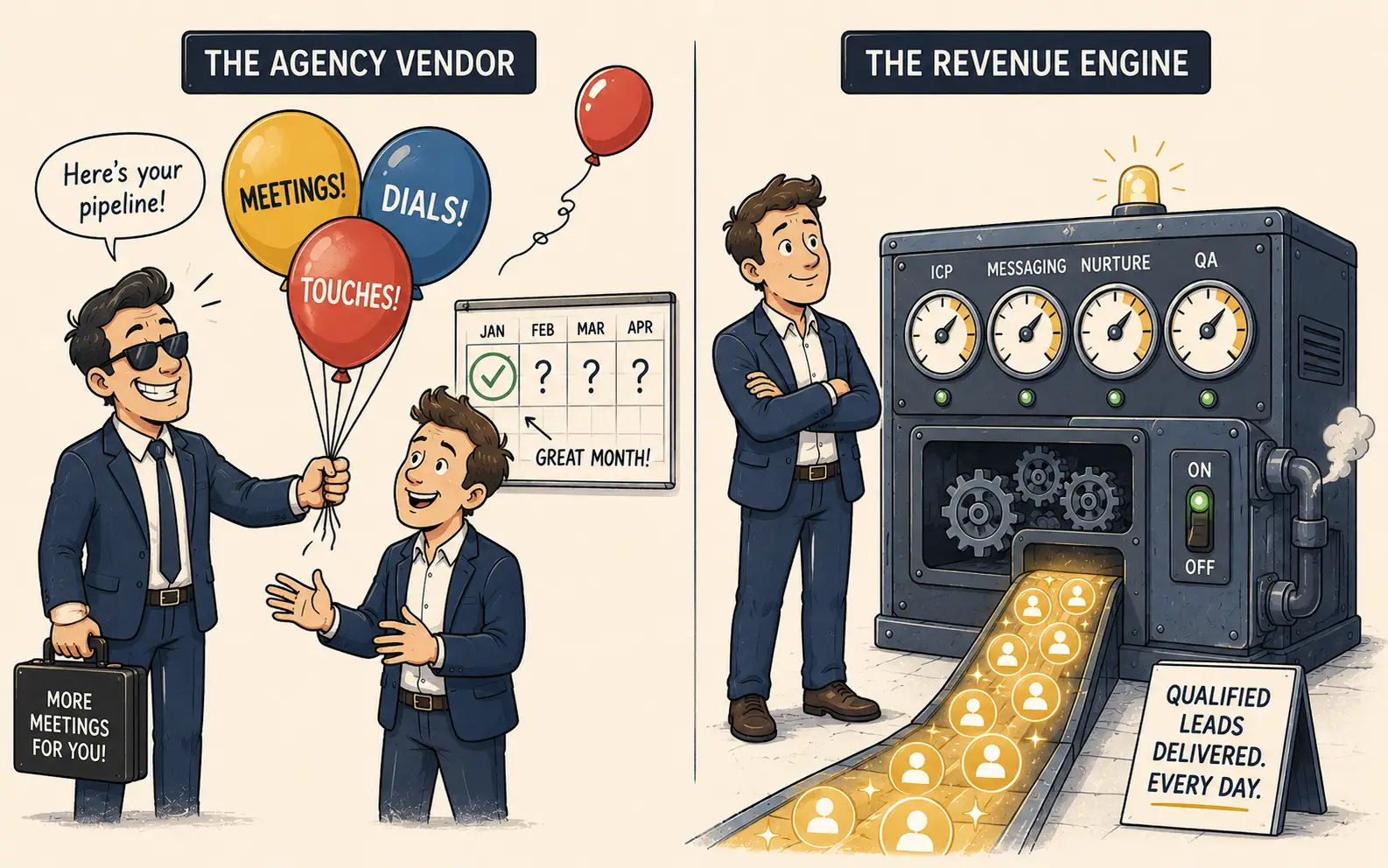
Yet most agencies stop at activity. They generate calls, meetings, or “touches,” but they rarely install infrastructure.
The result is predictable. Short-term pipeline spikes followed by long-term inconsistency.
If your pipeline feels strong one quarter and fragile the next, the problem may not be effort. It may be the absence of a real system.
Let’s examine why that happens.
The Activity Trap Most Agencies Fall Into
Most B2B lead generation agency models are optimized around volume.
More dials, emails, and appointments.
That sounds productive. It even looks productive in a dashboard.
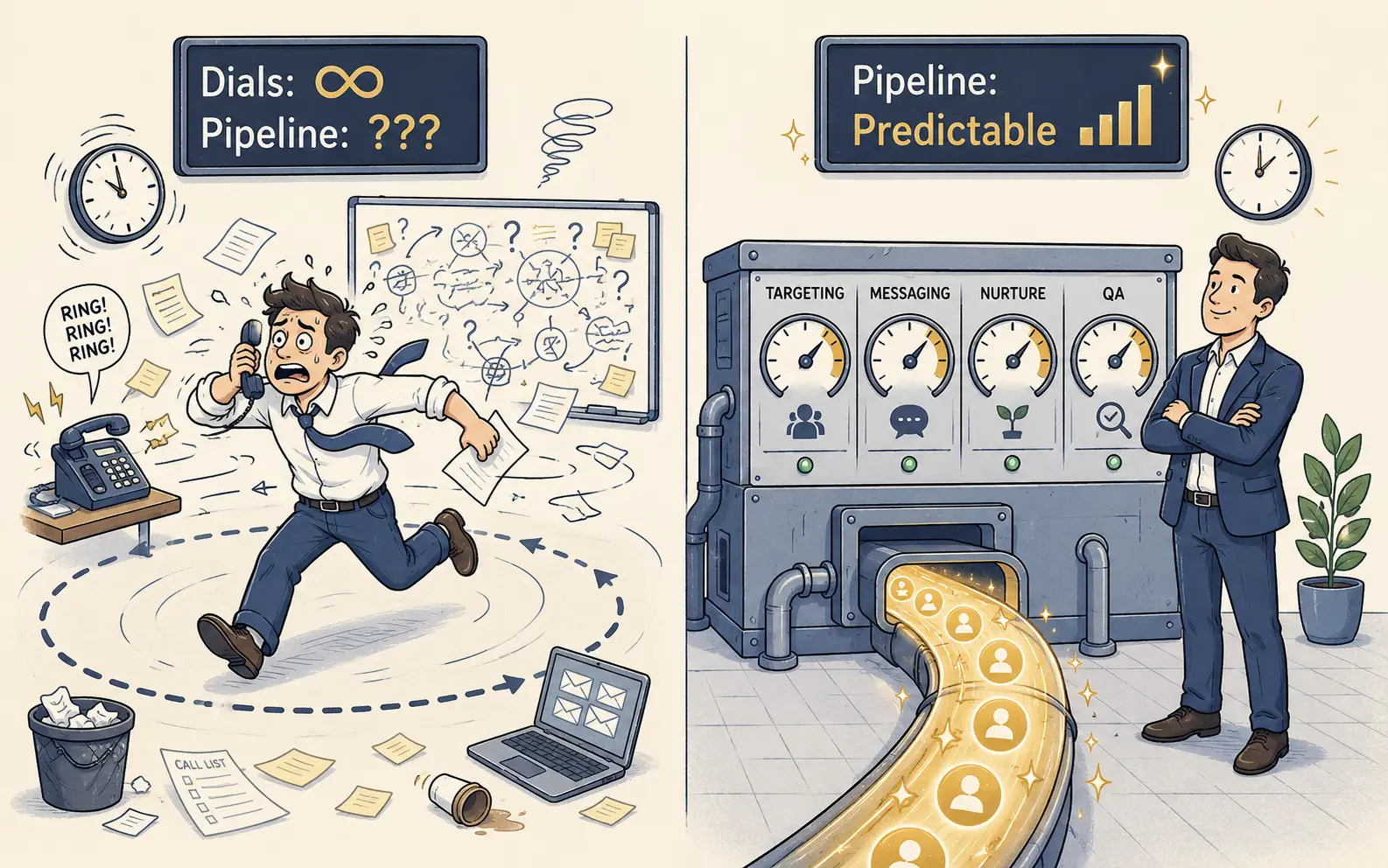
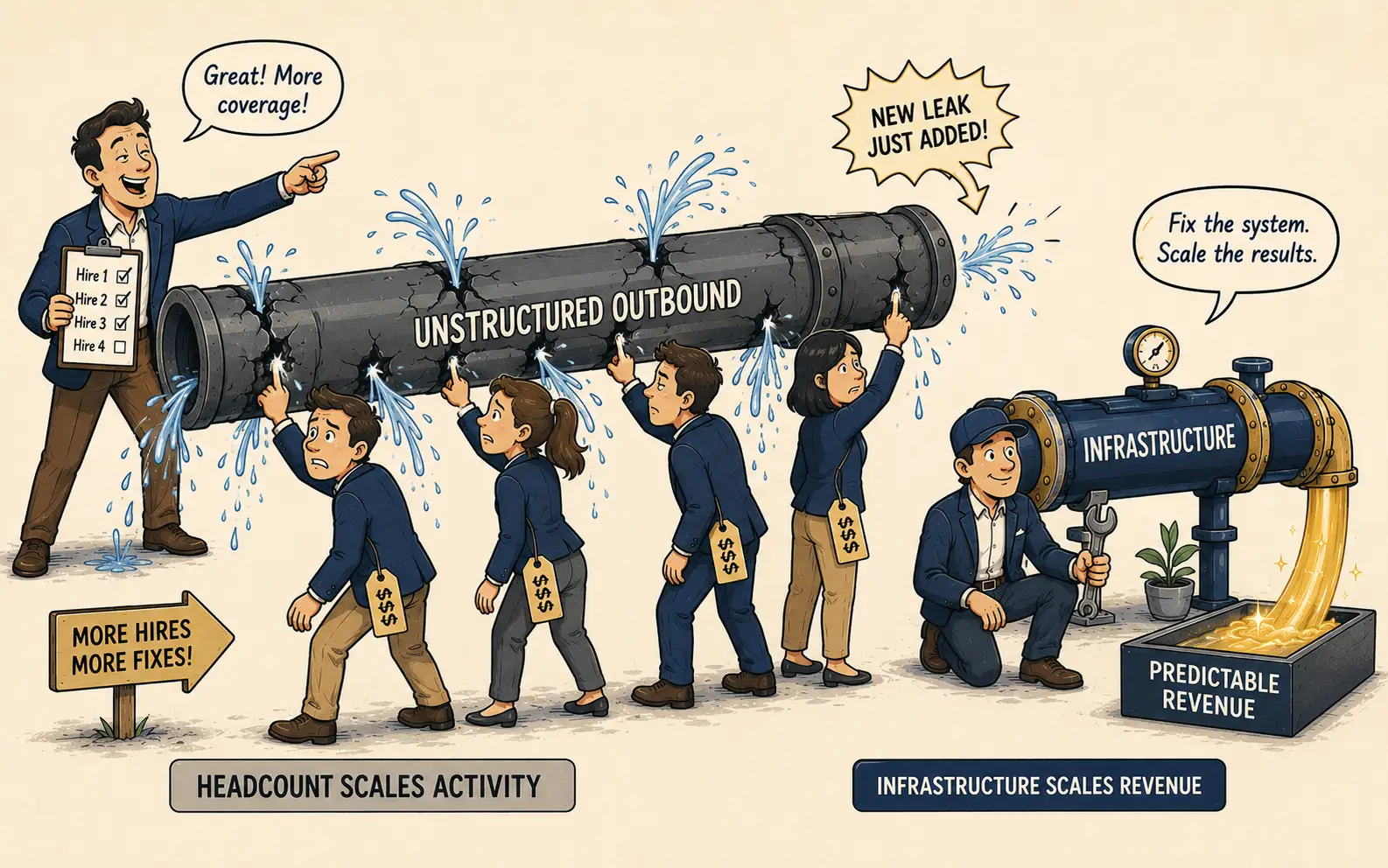
But volume without structure does not create a revenue engine for B2B organizations. It creates dependency.
When campaigns pause, pipeline drops. When the assigned rep changes, results fluctuate. When messaging drifts, conversion declines.
That is not an engine.
It is outsourced motion.
What a Real Revenue Engine for B2B Actually Requires
A true revenue engine for B2B companies is built on repeatability and refinement, not bursts of effort.
It includes:
Clearly defined ICP segments and list discipline
Persona-based messaging frameworks
Structured multi-touch nurture cadence
Documented qualification standards
KPI scorecards tied to outcomes
Objective quality assurance
This is outbound as infrastructure.
Without these components, even a capable B2B lead generation agency will struggle to deliver predictable results because there is no diagnostic framework to improve against.
At Lead Catalyst, outbound is governed by LIST, MESSAGE, NURTURE, KPIs, DATA, and QUALITY ASSURANCE. That integration is what converts activity into compounding performance.
Why Most Agencies Cannot Install Infrastructure
Here is the uncomfortable reality.Many agencies are optimized to sell campaigns, not build systems.
Their incentives revolve around:
Appointment volume
Activity metrics
Short-term deliverables
They are rarely structured to:
Diagnose ICP misalignment
Optimize messaging across verticals
Standardize coaching frameworks
Refine qualification thresholds
Build internal capability over time
So they operate as vendors, not infrastructure partners.
A B2B lead generation agency that cannot explain your conversion math is not building you a revenue engine for B2B growth.
They are renting you momentum.
The Signs Your Agency Is Not Building an Engine
If you are working with a B2B lead generation agency, consider the following:
Are ICP segments clearly defined and documented?
Are conversion benchmarks tracked stage by stage?
Can breakdowns be diagnosed quickly?
Is call quality scored objectively?
Does pipeline feel predictable or reactive?
If those answers are unclear, you likely have activity without structure. Predictable pipeline growth is engineered. It does not appear through volume alone.
What an Engine Looks Like in Practice
When outbound becomes infrastructure rather than outsourced activity:
Targeting sharpens quarter over quarter
Messaging improves through documented feedback loops
Objections are mapped and handled consistently
Nurture converts “not now” into structured future opportunities
Rep performance variance narrows
Now your B2B lead generation agency is not simply producing meetings. It is operating a revenue engine for B2B scale.
That distinction matters to founders and sales leaders. It matters even more to Private Equity operators who expect visibility, consistency, and measurable leverage.
The Difference Between a Vendor and a System Partner
A vendor executes tasks. A system partner installs structure.
A vendor says, “Here are your meetings.”
A system partner says, “Here is your conversion math. Here is where breakdown occurs. Here is how we improve it.”
At Lead Catalyst, we operate from a simple premise: sales performance is measurable. If it is measurable, it is improvable.
That mindset separates infrastructure from outsourced activity.
Frequently Asked Questions
What should a B2B lead generation agency actually deliver?
Beyond meetings, a strong B2B lead generation agency should deliver targeting clarity, structured messaging, KPI visibility, and measurable improvement over time.
What is a revenue engine for B2B companies?
A revenue engine for B2B is a structured outbound system that consistently generates qualified conversations through defined targeting, messaging, nurture, and performance standards.
How do I know if my agency is underperforming?
If results fluctuate significantly, conversion metrics are unclear, or improvement feels inconsistent, the system likely lacks structure.
Can an outsourced partner build internal capability?
Yes. The right partner installs frameworks, documentation, and reporting that your team can adopt long-term rather than creating dependency.
Top B2B Lead Generation Agencies
Most B2B lead generation agencies sell activity.
Few install infrastructure.
If you want a real revenue engine for B2B growth, you need structure, discipline, and continuous optimization.
Lead Catalyst builds outbound systems that compound over time rather than campaigns that fade when effort slows.
If your current partner cannot show you the engine, it may be time to build one.