US-Based SDR Team vs. Offshore Call Centers: What Impacts Conversion Most?
A US-based SDR team often outperforms offshore call centers when conversion quality is the priority. That statement usually triggers a cost debate.
Offshore teams are less expensive on paper. Outsourced SDR services promise volume at scale. The math looks attractive in a spreadsheet.
But conversion doesn’t live in a spreadsheet. It lives in conversations. The real question isn’t cost per hour. It’s the cost per qualified opportunity.
The Cost Conversation Most Companies Have
When leaders compare a US-based SDR team to offshore call centers, the first metric evaluated is typically hourly rate.
Offshore teams offer:
Lower labor cost
Larger calling capacity
Faster ramp on volume
Those advantages are real.
However, outbound success rarely depends on volume alone. If connect quality is weak or qualification depth is inconsistent, lower hourly cost can translate into higher cost per opportunity.
Outsourced SDR services should be evaluated on conversion impact, not activity output.
Where Conversion Quality Diverges
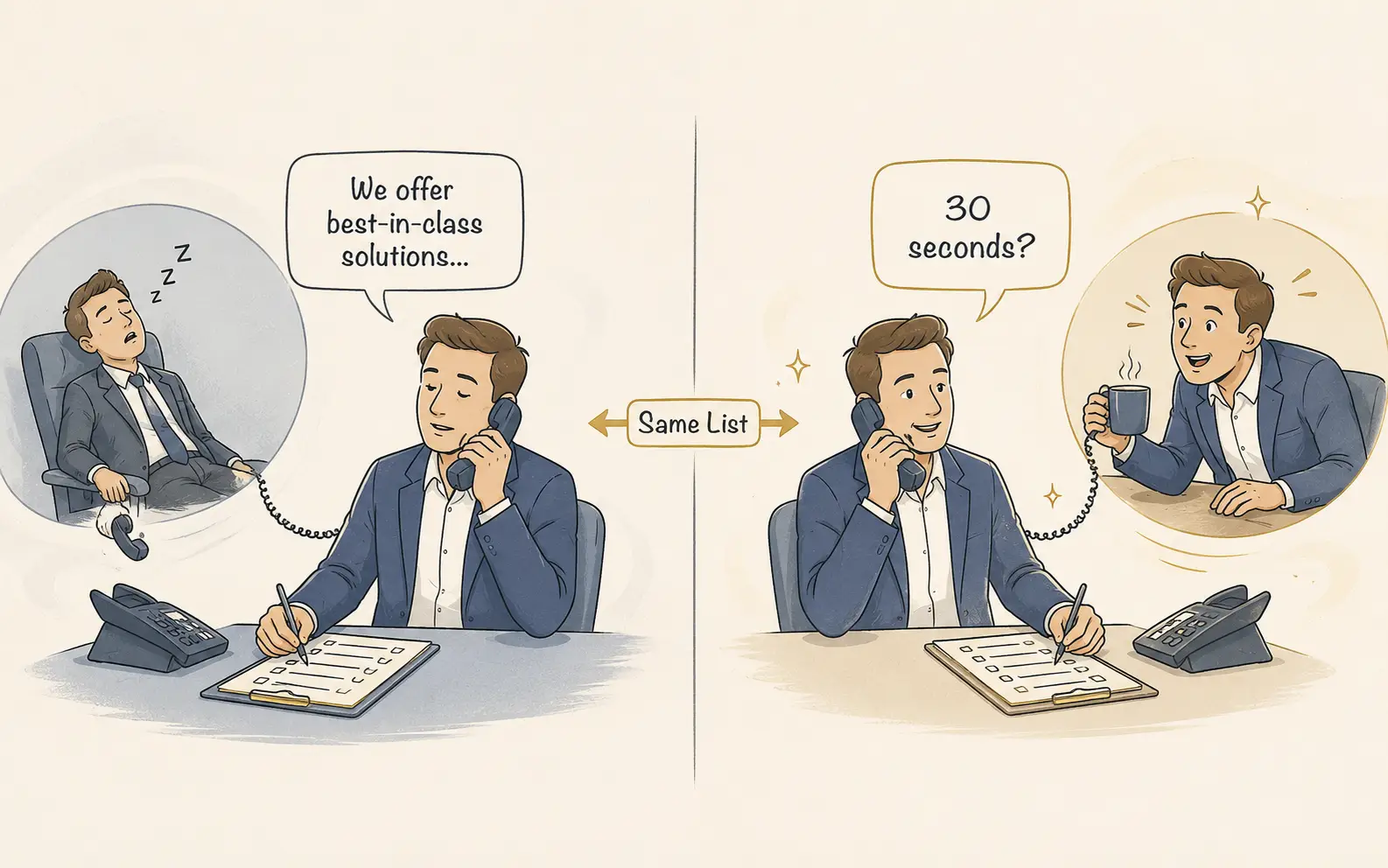
Conversion is influenced by nuance.
Tone. Context. Cultural alignment. Industry fluency. Objection handling precision.
A US-based SDR team often has:
Stronger cultural alignment with domestic buyers
Greater familiarity with regional business norms
More nuanced objection management
Better adaptability in unscripted conversations
Offshore teams can follow scripts effectively. However, complex B2B conversations rarely follow scripts.
When discovery requires subtlety, familiarity matters.
Qualification Depth Drives Downstream Stability
One of the biggest differences between a US-based SDR team and offshore call centers appears at the qualification stage.
If meetings are booked but poorly qualified, downstream pipeline becomes fragile. Sales teams waste time. Forecasting weakens.
Outsourced SDR services that prioritize meeting count over meeting quality may inflate early metrics while reducing late-stage conversion.
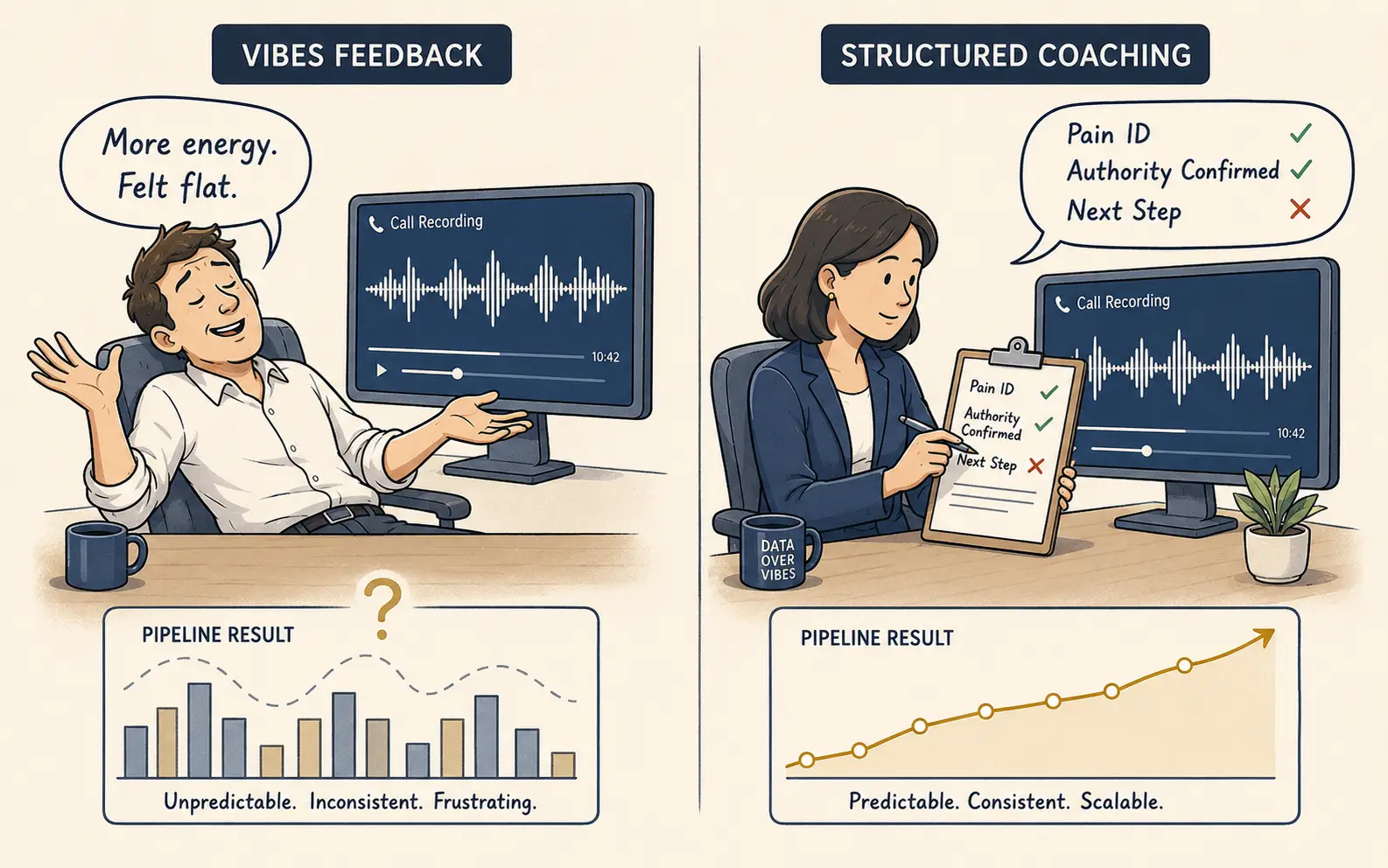
Another conversion factor often overlooked is coaching structure.
A US-based SDR team working within a structured sales quality assurance framework typically receives:
Objective call scoring
Stage-specific feedback
Segment-level performance tracking
Ongoing refinement
Without structured coaching, any team, domestic or offshore, will show variability.
The question is not geography alone. It is infrastructure.
Outsourced SDR services that combine proximity, fluency, and disciplined QA often outperform teams built solely for volume.
When Offshore Call Centers Can Work
This comparison is not binary.
Offshore models can perform effectively when:
The sales cycle is short
The product is transactional
Qualification complexity is low
Scripts require limited customization
In these environments, cost efficiency can outweigh nuance.
However, as deal size increases and stakeholder complexity grows, conversation quality becomes more influential than call volume.
That is where a US-based SDR team often creates leverage.
The True Conversion Metric
Instead of comparing cost per hour, compare:
Cost per qualified meeting
Opportunity creation rate
Sales-accepted opportunity percentage
Close rate by source
Revenue per meeting
When evaluated this way, the economics shift. A lower hourly rate that produces weaker qualifications can result in a higher total acquisition cost.
Outsourced SDR services should be measured by revenue contribution, not activity scale.
Signs Your SDR Model Is Hurting Conversion
If you’re experiencing:
High meeting volume but low opportunity creation
Frequent re-qualification by account executives
Significant variance in call quality
Forecast instability
The issue may not be rep effort. It may be conversion depth.
A US-based SDR team operating inside a structured outbound system often reduces that variability because conversation quality and QA standards align closely with revenue goals.
Balancing Cost and Conversion
Every organization must balance budget constraints with growth objectives.
The decision between a US-based SDR team and offshore call centers should align with:
Average deal size
Sales cycle complexity
Buyer sophistication
Internal coaching infrastructure
Cost matters. Conversion matters more.
Because volume without quality scales inefficiency.
Frequently Asked Questions
Does a US-based SDR team convert better than offshore call centers?
In complex B2B sales environments, a US-based SDR team often produces stronger qualification and higher downstream conversion.
Are outsourced SDR services always lower quality offshore?
Not necessarily. Performance depends on training, structure, and QA discipline. However, nuance and cultural alignment can impact conversion.
How should SDR performance be measured?
Teams should measure cost per qualified meeting, opportunity creation rate, and revenue contribution rather than activity volume alone.
Is offshore SDR support ever appropriate?
Yes. For high-volume, low-complexity offerings, offshore teams can provide efficient outreach capacity.
Final Word
The decision between a US-based SDR team and offshore call centers is not about patriotism. It is about predictability.
If your outbound motion relies on nuanced discovery, complex qualification, and disciplined QA, conversation quality becomes a revenue lever.
Outsourced SDR services should not be selected based solely on cost efficiency. They should be selected based on conversion impact.
Lead Catalyst builds outbound systems where conversation quality, structured coaching, and measurable diagnostics drive a predictable pipeline.
Because lower cost per hour means nothing if conversion leaks downstream.